
Pregnancy-Safe Indian Spices: What Helps, What to Limit, and What to Avoid
A clear, practical guide to Indian spices during pregnancy — which ones are safe, which to moderate, and which to genuinely avoid.
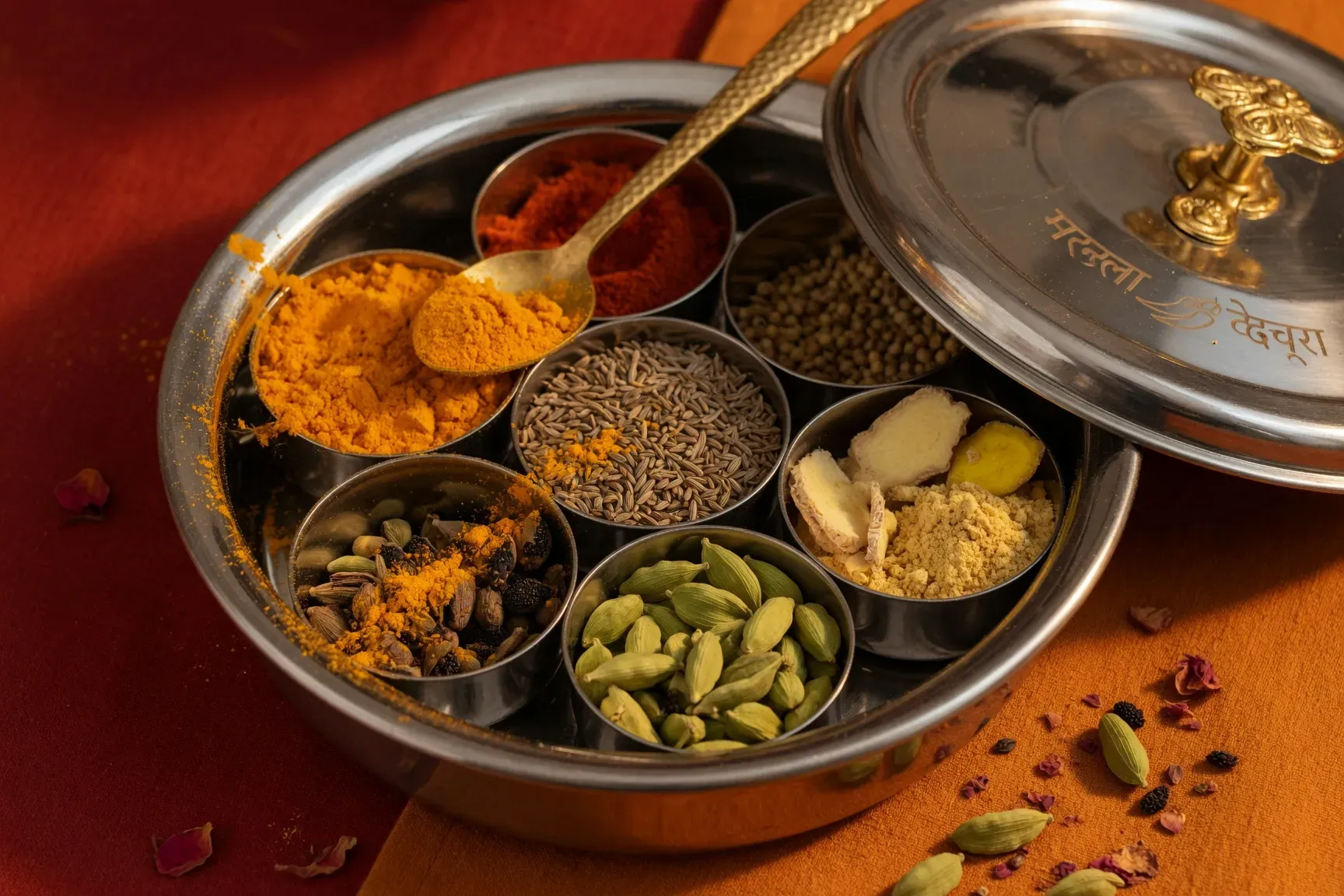
One of the most common anxieties that arrives with pregnancy — particularly in South Asian households — is the question of spices.
Should you stop cooking with masala? Is turmeric safe? Someone mentioned that fenugreek should be avoided. Your mother-in-law says to eat ginger for nausea but your neighbour says ginger is heating and dangerous. The internet offers seventeen contradictory answers. And meanwhile you just want to know whether the dal tadka you made last night was okay.
Here is the honest answer: the vast majority of Indian spices, used in the amounts typical of everyday cooking, are safe during pregnancy. The concerns that exist — and some are real — relate mostly to medicinal amounts, concentrated supplements, or a small number of specific spices where evidence of risk is more credible.
Understanding the distinction between culinary use and medicinal use is the key to making sense of most spice guidance. A teaspoon of fenugreek seeds in a dal is not the same as a therapeutic dose of fenugreek supplements. Turmeric in a curry is not the same as high-dose curcumin capsules. This distinction — often missing from the conflicting advice you may have already read — is what most of this article is built around.
The spices that are genuinely helpful in pregnancy
Ginger
Ginger has one of the strongest evidence bases of any food-based intervention for pregnancy nausea. It is broadly considered safe during pregnancy in culinary and mild therapeutic amounts — fresh ginger in chai, dried ginger in cooking, a small piece of fresh ginger chewed or steeped in hot water.
The caution around ginger relates to very high supplemental doses, which are not necessary and not what most people are using when they cook with it. If you’re drinking ginger chai or adding it to your food, you are well within safe culinary use.
Ginger also has mild anti-inflammatory properties, supports digestion, and many women find it genuinely helps with the nausea and gastric discomfort that comes with early pregnancy. It’s one of the few spices that traditional practice and modern evidence agree on.
Turmeric
Turmeric is safe — and beneficial — in the amounts used in everyday Indian cooking. Its active compound, curcumin, has anti-inflammatory properties, supports immune function, and has been part of the South Asian diet for generations, including across countless generations of pregnancies.
The concern about turmeric in pregnancy applies to high-dose curcumin supplements, not to the teaspoon or so of turmeric that goes into a dal, curry, or golden milk. If anything, the mild anti-inflammatory and antioxidant properties of culinary turmeric are a genuine benefit rather than a risk.
Golden milk — warm milk with a pinch of turmeric — is a traditional remedy across India that many women find soothing in pregnancy. Used this way, it is safe and nourishing.
Cumin (jeera)
Cumin is safe throughout pregnancy and provides a small amount of iron alongside its flavour. The tadka that begins most South Indian cooking — mustard seeds, cumin, curry leaves — is entirely fine, and cumin-spiced dal or rice is not something to second-guess.
Coriander
Fresh coriander leaves and coriander seeds are both safe in culinary amounts during pregnancy. Coriander is mildly digestive and anti-inflammatory, and the fresh herb is a useful source of vitamin C when used generously as a garnish.
Cardamom (elaichi)
Safe in culinary amounts. Cardamom has traditionally been used to ease nausea and digestive discomfort, and its presence in chai, rice dishes, and sweets is not a concern during pregnancy. It is only at very high medicinal doses that any caution applies, and that level of consumption is not something that happens through cooking.
Mustard seeds
The mustard seeds used in tadka are safe in pregnancy. The amounts involved in cooking are well within culinary use, and mustard provides a small amount of calcium and omega-3 fatty acids alongside its familiar flavour base.
Curry leaves
Curry leaves are safe and nutritionally useful — they contain iron, calcium, and vitamins A and C. The concern sometimes expressed about curry leaves relates to very large therapeutic amounts consumed specifically for their medicinal properties, not to the handful of leaves that go into a coconut chutney or a tadka.
Black pepper
Safe in culinary amounts throughout pregnancy. Black pepper also contains piperine, which enhances the absorption of curcumin from turmeric — a combination that traditional cooking has always understood, and which modern nutrition has confirmed.
Ajwain (carom seeds)
Generally safe in small culinary amounts. Ajwain has traditionally been used to ease bloating and digestive discomfort in pregnancy, and a small amount in parathas or a light ajwain water is a common home remedy for gas. Large amounts should be avoided, but this is not something that typically happens through normal cooking.
Spices to use in moderation
Fenugreek (methi)
This one generates the most confusion, and the answer depends on the amount and form.
Fresh fenugreek leaves (methi saag) in a curry or methi paratha is fine — these are culinary amounts, and including methi as part of your regular vegetable rotation is not a concern. The leaf form, eaten as food, is generally considered safe.
Fenugreek seeds in larger medicinal amounts — such as fenugreek supplements taken to stimulate lactation, or consuming large amounts of the seeds intentionally — are where caution applies. Fenugreek has uterine-stimulating properties at higher doses, which is why concentrated supplemental use during pregnancy is not recommended without medical guidance.
The practical guidance: cook with methi leaves as you normally would. Don’t take fenugreek supplements during pregnancy unless specifically advised by your provider.
Cinnamon
Safe in culinary amounts — in biryanis, chai, sweets, and rice pudding. The concern about cinnamon in pregnancy relates specifically to Cassia cinnamon (the common supermarket variety) in very large supplemental doses, where it may affect uterine tone and blood sugar in ways that aren’t appropriate during pregnancy.
A stick of cinnamon in chai or a small amount in cooking is fine. Cinnamon supplements or large deliberate doses for blood sugar management should only be taken under medical guidance.
Asafoetida (hing)
Used in very small amounts as a cooking agent — which is exactly how it’s used — asafoetida is generally considered safe and is a traditional remedy for bloating and digestive discomfort. It is used in quantities of a pinch, not a spoonful, and at that level it is not a concern.
There is limited formal research on asafoetida in pregnancy, so some providers recommend avoiding it entirely as a precaution. If your provider has specifically advised against it, follow that guidance. If not, small culinary amounts are generally considered acceptable.
Hot chillies
Chillies themselves are not dangerous during pregnancy. They may worsen heartburn and acid reflux, which are already common in the second and third trimesters — so if you find spicy food is causing discomfort, that’s a practical reason to moderate the heat level, not a safety concern.
If you tolerate spicy food without discomfort, there is no evidence that chillies in your cooking pose any risk to your pregnancy. This is a comfort issue, not a safety one.
Spices to avoid or significantly limit
High-dose herbal supplements containing spice-based compounds
This is the category where real caution applies. Taking concentrated supplements of any spice — fenugreek, turmeric, ginger, cinnamon — at doses far beyond what you’d consume in food is a different proposition from cooking with them. These supplements can have pharmacological effects at high doses that culinary use never reaches.
Do not take any herbal supplement during pregnancy without discussing it with your provider, even if the supplement is plant-based and seems natural.
Papaya leaf or papaya seed extract
Not a spice, but worth addressing here because it comes up in the context of Indian home remedies. Ripe papaya fruit in moderate amounts is generally considered safe; papaya leaf extract and papaya seeds, which contain concentrated amounts of papain and other compounds, are not recommended during pregnancy.
Large amounts of any uterine-stimulant herb
Some traditional herbs and spice preparations used in Indian medicine are specifically intended to stimulate the uterus — these are not everyday cooking spices, but they sometimes appear in traditional remedies or herbal preparations. Avoid any preparation that is described as “heating” in a medicinal context, or any that have traditionally been used to bring on menstruation or labour, during pregnancy without explicit medical guidance.
The “heating” and “cooling” food framework
You may be familiar with the Ayurvedic or traditional Indian concept of foods being “heating” or “cooling” — and may have been told that certain spices are too heating for pregnancy.
This framework is part of a rich and longstanding traditional understanding of food and health, and it is worth taking seriously as a way of thinking about how foods affect your body. However, the “heating” designation in traditional practice is not the same as being medically contraindicated. Many spices described as heating — ginger, turmeric, cumin, black pepper — are safe in pregnancy by the evidence that exists.
The concern is valid when it refers to very stimulating preparations or large medicinal doses. It is less applicable to everyday cooking. Use the traditional framework as guidance for how a food makes you feel — if something feels too intense or causes discomfort, trust that response — but don’t apply it as a blanket prohibition on spices that have been part of South Asian pregnancies for generations.
What this means for everyday cooking
The honest answer is that your regular cooking — the dal with its tadka, the fish curry with turmeric and mustard seeds, the rice with jeera, the chai with ginger and cardamom — does not need to be modified for safety during pregnancy.
The changes worth making, if any, are:
- Moderating chilli heat if heartburn is a problem
- Avoiding methi seeds in large supplemental amounts
- Not starting any concentrated herbal or spice supplement without medical advice
- Reducing the overall richness or heaviness of spiced food if digestion is affected — a practical comfort adjustment, not a safety one
Your kitchen is not a danger zone. The same cooking that nourished generations of women through pregnancy in South India continues to nourish you. Cook the food you know, eat the flavours your body is familiar with, and save the detailed spice anxieties for things that actually warrant them.
This article is for general educational purposes only and does not replace personalised nutrition or medical advice. Always consult your doctor, midwife, or a qualified healthcare professional about your specific dietary needs during pregnancy.