High Blood Pressure and Preeclampsia: What Indian Expecting Mothers Should Know
A clear guide to hypertension and preeclampsia in pregnancy — why Indian women are at higher risk, how it is detected, and what management involves.
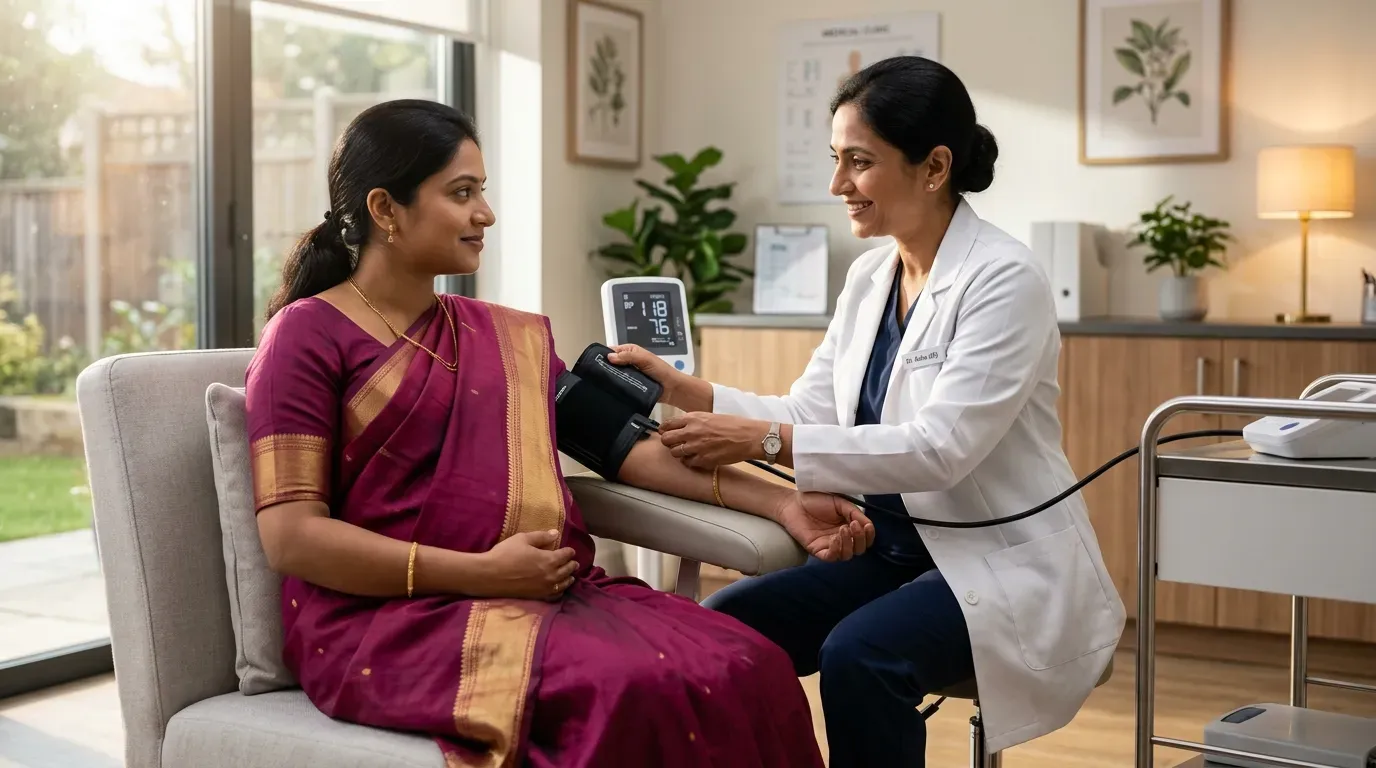
High blood pressure during pregnancy is one of the conditions that antenatal care is specifically designed to catch — and catching it early is one of the most important things that regular appointments achieve.
Hypertensive disorders of pregnancy, which include gestational hypertension and preeclampsia, are among the leading causes of maternal and infant mortality globally. In India, preeclampsia is responsible for a significant proportion of maternal deaths, particularly in settings where antenatal monitoring is inadequate or where women do not reach care quickly when symptoms develop.
This is not said to cause alarm. It is said because understanding what these conditions are, how they are detected, and what the warning signs look like empowers you to be an active participant in monitoring your own pregnancy — which is one of the most effective forms of early detection available.
The different types of high blood pressure in pregnancy
Not all high blood pressure in pregnancy is the same, and the distinctions matter for management.
Chronic hypertension — high blood pressure that existed before pregnancy or that is diagnosed before twenty weeks of pregnancy. Women with chronic hypertension require careful monitoring throughout pregnancy as they are at higher risk of preeclampsia.
Gestational hypertension — high blood pressure that develops after twenty weeks of pregnancy without protein in the urine or other organ involvement. It resolves after delivery. Some women with gestational hypertension go on to develop preeclampsia.
Preeclampsia — high blood pressure after twenty weeks of pregnancy accompanied by signs of organ damage — most commonly protein in the urine (proteinuria), but also abnormal kidney function, liver enzyme elevations, low platelet count, pulmonary oedema, or neurological symptoms. Preeclampsia can develop rapidly and progress to severe disease, seizures (eclampsia), and life-threatening complications.
Eclampsia — the occurrence of seizures in a woman with preeclampsia. This is a medical emergency.
HELLP syndrome — a severe form of preeclampsia involving haemolysis (destruction of red blood cells), elevated liver enzymes, and low platelets. Requires immediate delivery.
What preeclampsia actually is
Despite decades of research, preeclampsia is not fully understood. What is known is that it originates in the placenta — specifically in abnormal development of the blood vessels that connect the placenta to the uterine wall. This abnormal vascular development reduces placental blood flow and causes the placenta to release substances that damage blood vessel lining throughout the mother’s body, leading to the systemic effects that define the condition.
Preeclampsia is a disease of the whole body, not just of blood pressure. The elevated blood pressure is one sign of widespread vascular damage that can affect the kidneys, liver, brain, and placenta itself. This is why it is more serious than simple high blood pressure and why it can deteriorate rapidly in ways that simple hypertension does not.
Risk factors — and why Indian women need to pay attention
The risk factors for preeclampsia include:
- First pregnancy (risk is highest in a first pregnancy)
- Previous preeclampsia — the risk of recurrence in a subsequent pregnancy is significant
- Multiple pregnancy (twins or more)
- Obesity or high BMI
- Pre-existing hypertension
- Pre-existing diabetes or gestational diabetes
- Kidney disease
- Autoimmune conditions including lupus and antiphospholipid syndrome
- Family history of preeclampsia
- Age over forty
In the Indian context, several additional factors increase population-level risk: the high rates of gestational diabetes (which is a risk factor), nutritional deficiencies (particularly calcium, which is associated with higher preeclampsia risk), high rates of anaemia affecting vascular health, and inconsistent access to antenatal monitoring in some settings.
Low calcium intake specifically has been associated with higher risk of preeclampsia, and calcium supplementation (1–1.5 grams per day) in women with low dietary calcium intake has evidence for reducing preeclampsia risk. If your diet is low in dairy and calcium-rich foods, discuss this with your provider.
How it is detected
Preeclampsia is detected through the routine monitoring that occurs at every antenatal visit:
Blood pressure measurement — blood pressure is checked at every visit. Normal blood pressure in pregnancy is below 140/90 mmHg. A reading of 140/90 or above on two occasions at least four hours apart (or a single reading of 160/110 or above) meets the diagnostic threshold for hypertension in pregnancy.
Urine testing — urine is checked for protein at antenatal visits. Protein in the urine (proteinuria) alongside high blood pressure is a key diagnostic criterion for preeclampsia.
Blood tests — when preeclampsia is suspected, blood tests check kidney function (creatinine, urea), liver enzymes (ALT, AST), and platelet count. Abnormalities indicate the degree of organ involvement.
Fetal monitoring — because preeclampsia can restrict placental blood flow and affect fetal growth, ultrasound and Doppler assessments of fetal wellbeing and placental blood flow are part of monitoring in confirmed or suspected preeclampsia.
This is why attending every antenatal appointment matters — not as a formality, but because blood pressure and urine testing at regular intervals are genuinely how this condition is caught before it becomes severe. Women who miss appointments are the ones most likely to present at hospital with advanced disease.
Warning signs to know
There are symptoms that should prompt you to contact your provider or go to hospital immediately, without waiting for a scheduled appointment:
- Severe headache that does not improve with paracetamol
- Visual disturbances — blurring, flashing lights, seeing spots
- Pain in the upper right abdomen or under the ribcage (this is a liver sign)
- Sudden or rapid swelling of the face, hands, or feet — particularly if you wake up with facial swelling
- Shortness of breath or difficulty breathing
- Vomiting alongside any of the above
Note that some swelling in the feet and ankles is normal in pregnancy — particularly in the third trimester in warm climates. The concerning swelling is sudden, severe, or involves the face and hands alongside other symptoms.
If you experience any of these, do not wait and see. Contact your provider or go to your nearest hospital.
What management involves
The only definitive cure for preeclampsia is delivery of the baby and placenta. All management before delivery is about controlling blood pressure and monitoring for signs of deterioration to allow the pregnancy to continue as safely as possible for as long as possible.
Mild to moderate preeclampsia — close monitoring, blood pressure measurement at home if advised, regular antenatal appointments (often twice weekly), blood tests, and fetal monitoring. Bed rest is sometimes recommended, though evidence for its benefit is limited. Delivery is planned, often before forty weeks depending on the severity and trajectory of the condition.
Antihypertensive medication — if blood pressure is significantly elevated, medication to bring it into a safer range is prescribed. Commonly used medications that are considered safe in pregnancy include labetalol, nifedipine, and methyldopa. You should not take any blood pressure medication not prescribed for you.
Magnesium sulphate — given in cases of severe preeclampsia to prevent seizures (eclampsia). It is administered intravenously or by injection in a hospital setting.
Aspirin — low-dose aspirin (75–150 mg daily) started before sixteen weeks of pregnancy is recommended for women at high risk of preeclampsia, as it reduces the risk significantly. If you have risk factors, ask your provider whether low-dose aspirin is appropriate for you early in pregnancy — the timing matters.
Delivery — if preeclampsia is severe, if it develops before viability, or if there are signs of maternal or fetal deterioration, delivery is indicated regardless of gestation. After delivery, blood pressure often (though not always) normalises within days to weeks.
After the pregnancy
Preeclampsia has implications beyond the pregnancy itself. Women who have had preeclampsia have a higher long-term risk of cardiovascular disease, hypertension, kidney disease, and stroke. This is worth knowing not to be frightening, but because it supports the case for postpartum follow-up of blood pressure, long-term cardiovascular health monitoring, and the lifestyle measures — diet, weight, physical activity, not smoking — that reduce cardiovascular risk.
Blood pressure is typically monitored in the days and weeks after delivery, as it can remain elevated or, in some cases, worsen in the postpartum period. If you were discharged on antihypertensive medication, attend your postpartum appointments and don’t stop medication without medical guidance.
The honest message
Preeclampsia is serious. It is also detectable through the monitoring that antenatal care provides — which is why attending appointments and knowing the warning signs are the two most important things you can do.
If you have risk factors, discuss them with your provider early in pregnancy. Ask about low-dose aspirin. Attend every appointment. Know the symptoms. And if anything feels wrong — a headache that won’t shift, swelling that appeared overnight, visual changes — don’t minimise it or wait. Seek care.
The outcomes from preeclampsia are significantly better when it is caught early and managed appropriately. The system works when women are in it, attending regularly, and take their symptoms seriously.
This article is for general educational purposes only and does not replace personalised medical advice. Always consult your doctor, midwife, or a qualified healthcare professional about your blood pressure and any symptoms during pregnancy.