Baby Blues Versus Postpartum Depression: How to Tell the Difference
A clear, compassionate guide to understanding the difference between baby blues and postpartum depression — symptoms, timeline, when to seek help, and why asking for support is not weakness.
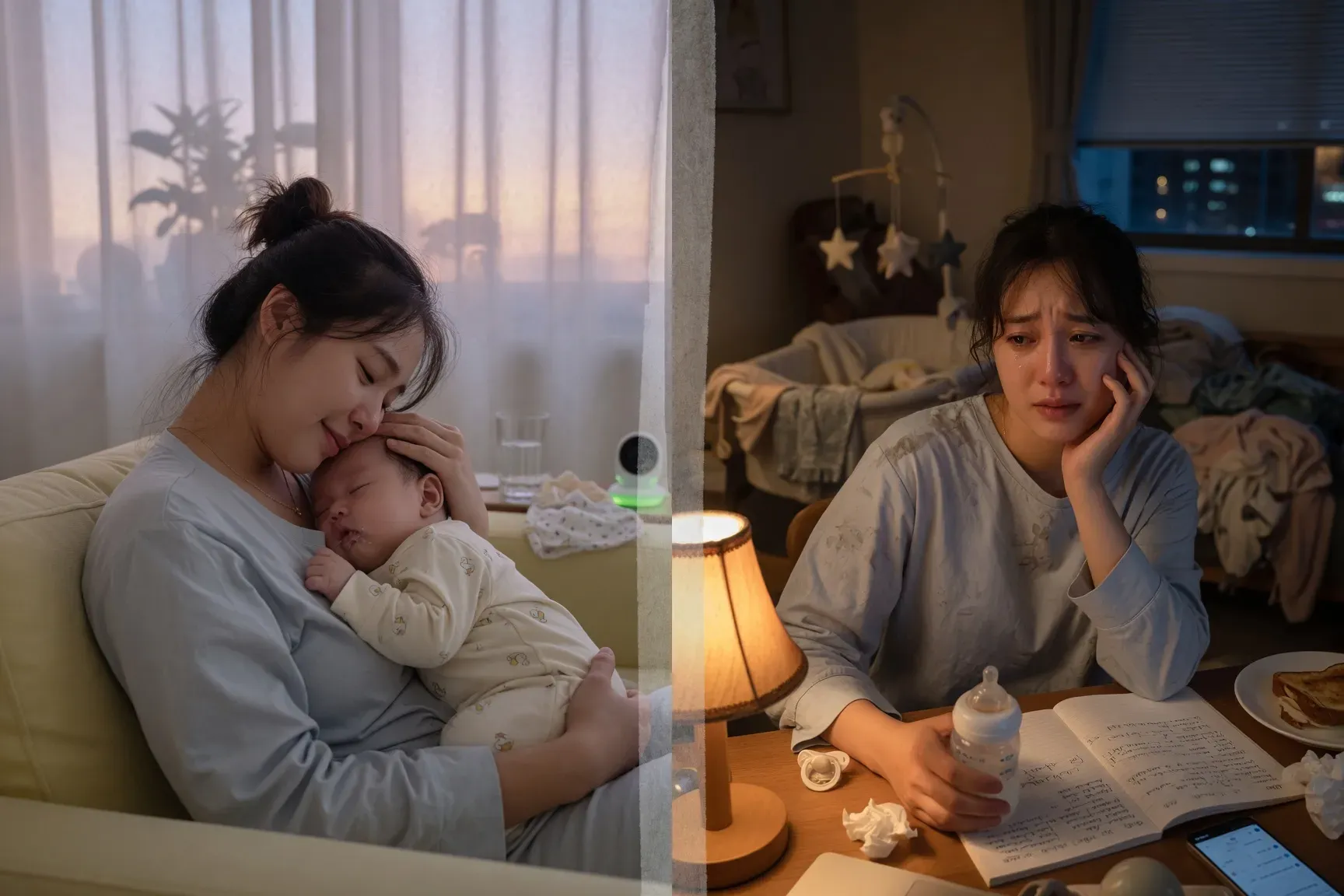
In the days after birth, many new mothers find themselves crying without knowing why. Overwhelmed by something they can’t name. Elated one hour and tearful the next. Loving their baby fiercely and simultaneously feeling like something is wrong, or that they are doing this wrong, or that the person they were before has disappeared.
If this sounds familiar, you are not alone. And you are not failing.
What you are likely experiencing — if it arrived in the first days and feels like an emotional weather system rather than a persistent state — is the baby blues. What you need to watch for is whether it becomes something more sustained and significant: postpartum depression.
Understanding the difference is not just academic. It is the difference between knowing that what you are feeling will pass on its own and knowing when to ask for help.
The baby blues
Baby blues affect between 50 and 80 percent of new mothers. They are not a disorder. They are a normal physiological response to the most dramatic hormonal shift the human body experiences — the rapid drop in oestrogen and progesterone that occurs within days of birth.
When it starts: Typically day two to four after birth, often coinciding with milk coming in.
What it feels like: Mood swings, weeping that arrives without a clear trigger, emotional sensitivity, anxiety, irritability, feeling overwhelmed, difficulty sleeping even when the baby is sleeping.
What it doesn’t include: Persistent inability to function, thoughts of harming yourself or your baby, complete inability to bond with your baby, or feelings that are debilitating rather than simply difficult.
When it ends: Baby blues typically resolve on their own within two weeks of birth. No treatment is required, though support — rest, help with the baby, the presence of people who are kind rather than demanding — makes the two weeks more manageable.
If the symptoms of baby blues are still present and significant at two weeks after birth, or if they worsen rather than improve, this warrants evaluation.
Postpartum depression
Postpartum depression (PPD) is different from baby blues in its duration, its intensity, and its impact on your ability to function and to care for your baby. It is not a sign of weakness, inadequacy, or failure as a mother. It is a medical condition that occurs in approximately 10–15% of new mothers and is treatable.
When it starts: PPD can begin any time in the first year after birth — sometimes in the first weeks, sometimes later. It may look initially like baby blues that don’t resolve.
What it feels like:
- Persistent sadness, emptiness, or hopelessness that doesn’t lift
- Loss of interest or pleasure in things that used to matter
- Exhaustion beyond what sleep deprivation alone explains
- Anxiety that is severe, persistent, or debilitating
- Difficulty bonding with your baby — feeling disconnected, numb, or going through the motions
- Feeling like a bad mother, or that your baby would be better off without you
- Difficulty making decisions or concentrating
- Physical symptoms — changes in appetite, sleep disturbance beyond the baby’s schedule, unexplained physical complaints
The difference that matters most: Baby blues are difficult but manageable, change from hour to hour, and improve over days. Postpartum depression is persistent, often worsens over time without support, and interferes significantly with your ability to function and to care for yourself and your baby.
Postpartum anxiety
Postpartum anxiety is as common as postpartum depression and often goes unrecognised — both by healthcare providers and by mothers themselves, because the cultural conversation around postpartum mental health focuses more on sadness than on anxiety.
Signs of postpartum anxiety include constant, uncontrollable worrying (about the baby’s health, about something going wrong, about your own adequacy), physical symptoms of anxiety (racing heart, shortness of breath, dizziness), inability to rest even when the baby is sleeping, and intrusive thoughts about something happening to the baby.
Intrusive thoughts — unwanted, distressing thoughts about harm coming to the baby — deserve specific mention. They are more common in the postpartum period than most mothers know, and the shame and fear around having them often prevents women from seeking help. Having a distressing thought is not the same as wanting to act on it. If you are experiencing intrusive thoughts, please talk to your doctor — this is a recognised and treatable symptom of postpartum anxiety and OCD, not evidence of what kind of mother you are.
Postpartum psychosis
Postpartum psychosis is rare — affecting approximately 1–2 in 1,000 new mothers — but it is a psychiatric emergency. It typically begins within the first two weeks after birth and includes hallucinations, delusions, confusion, extreme mood swings, and behaviour that is significantly out of character. If you or someone around you notices these signs, seek emergency medical care immediately. Postpartum psychosis is treatable with prompt intervention.
The Indian context
In India, postpartum mental health is significantly underdiagnosed and undertreated. This is partly a healthcare access issue, partly a cultural issue around the expectation that a new mother should be happy and grateful, and partly a stigma issue around mental health that affects the whole society but has particular force around motherhood.
New mothers in India are frequently told — by family, by cultural expectation, and sometimes by their own internal voice — that they should feel blessed, that they have a healthy baby and therefore no reason to be sad, that feeling this way is not acceptable or is a sign of ingratitude. This narrative delays help-seeking and compounds the suffering that postpartum depression and anxiety already cause.
Some things worth saying clearly: Postpartum depression is not ingratitude. It is not weakness. It is not failure. It is a medical condition with a biological basis, and it is not caused by having a healthy baby or a supportive family. It can coexist with genuine love for your baby. Having a joint family around you does not make you immune to it, and in some circumstances the pressures of a joint family environment can contribute to it.
When and how to seek help
Talk to your doctor. Your six-week postpartum check should include a mental health screen — if it doesn’t, raise the subject yourself. If you are struggling significantly before six weeks, do not wait for the scheduled check. Call your doctor’s clinic and describe what you are experiencing.
Tell someone you trust. The isolation of not naming what you are going through is part of what makes postpartum mental health conditions harder to bear. Telling your partner, your mother, a close friend — someone who can advocate for you and help you access support — reduces that isolation.
Know that it is treatable. Postpartum depression and anxiety respond well to treatment — counselling, peer support groups, and in moderate to severe cases, medication that is safe with breastfeeding. Most women who seek treatment recover fully. Treatment does not mean you have failed. It means you are taking care of yourself, which is also taking care of your baby.
If you are having thoughts of harming yourself or your baby, please seek help immediately — contact your doctor, go to your nearest hospital emergency department, or call a crisis helpline. You do not have to manage this alone.
This article is for general educational purposes only and does not replace assessment or treatment by a qualified mental health professional.