
Group B Strep Testing: What It Is and Why It Matters Near the End of Pregnancy
A clear guide to Group B Streptococcus screening in pregnancy — what GBS is, how testing works, what a positive result means, and what happens during labour.
Group B Streptococcus — GBS, or Group B Strep — is one of those terms that appears on a test form late in pregnancy and produces a set of questions that deserve clear, calm answers.
What is it? Why is it being tested? What happens if the result is positive? Does it mean something is wrong?
The reassuring starting point is that GBS is a common bacterium found in the digestive and genital tracts of a significant proportion of healthy adults. Carrying GBS is not an infection, not a sexually transmitted condition, and not a sign of poor hygiene. Most adults who carry GBS have no symptoms and no health consequences from it. The reason it matters in pregnancy is specific: GBS can be passed to a baby during labour and delivery, and in a small but significant proportion of newborns it causes serious infection.
The purpose of testing near the end of pregnancy is to identify which women are carrying GBS so that precautions can be taken during labour to reduce the risk of the baby being exposed.
What Group B Streptococcus is
Group B Streptococcus (Streptococcus agalactiae) is a naturally occurring bacterium that lives in the gut and lower genital tract of approximately fifteen to forty percent of healthy adults. It causes no symptoms in adults who carry it and requires no treatment outside of pregnancy or specific medical contexts.
GBS colonisation is not permanent or stable — a woman might test positive at one point in pregnancy and negative at another, or test negative and develop colonisation before labour. This is why testing is done specifically at thirty-five to thirty-seven weeks rather than earlier in pregnancy.
The concern in pregnancy is transmission to the baby during labour and birth. As the baby passes through the birth canal, they may be exposed to GBS from the vagina or rectum. In most babies, this exposure causes no harm. But in a small percentage — approximately one to two percent of babies born to GBS-positive mothers who receive no prophylaxis — GBS causes early-onset infection, which can manifest as sepsis, pneumonia, or meningitis in the newborn.
Early-onset GBS disease in newborns is serious. With treatment it is usually survivable, but it can cause lasting harm or, in severe cases, death. The prevention strategy — identifying carriers and providing antibiotics during labour — significantly reduces this risk.
How GBS testing works
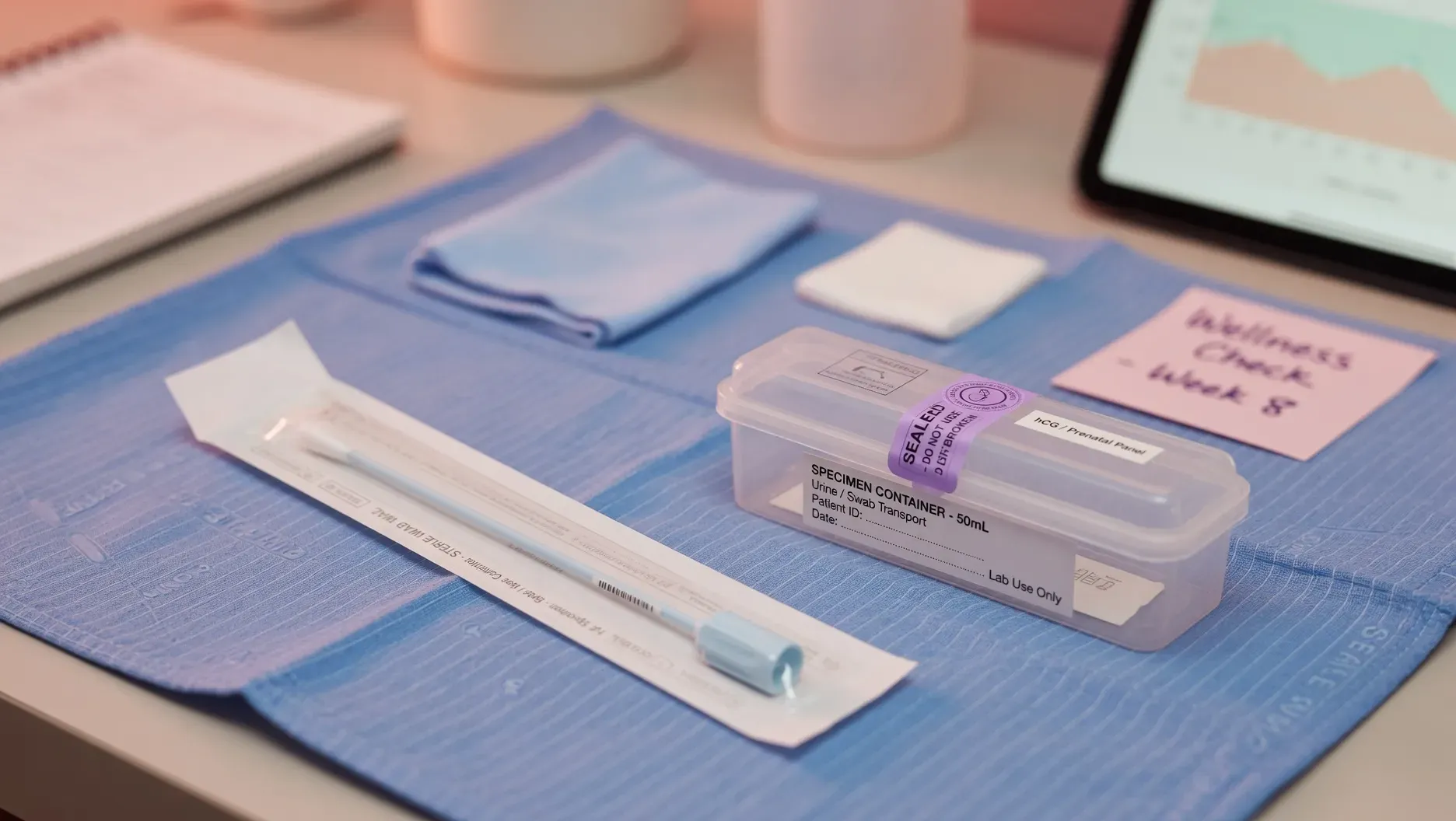
GBS testing is done using a swab taken from the vagina and rectum (or perirectally). In a clinic or hospital setting this is done by a provider; the swab is sent to a laboratory and results are typically available within two to three days.
Some women are offered self-swabbing kits, where they collect the swab themselves following instructions — this is straightforward and the results are equivalent to provider-collected swabs.
When testing is done: The standard recommendation is between thirty-five and thirty-seven weeks of pregnancy. This timing reflects the fact that GBS colonisation can change over time, and a test done too early may not accurately reflect GBS status at the time of delivery.
Testing is not universal in India: GBS screening in pregnancy is routine practice in many Western countries but is not uniformly part of standard antenatal care across India. Some private providers and hospitals routinely test; others do not, instead using a risk-based approach to decide who receives antibiotics during labour. If you are approaching thirty-five weeks and have not been offered GBS testing, it is reasonable to ask your provider whether it is standard practice at your facility and what approach they take if it is not.
What a positive result means
A positive GBS test result means that GBS bacteria were found in the swab at the time of testing. It does not mean you have an infection. It does not mean anything is wrong with you. It means you are a carrier — which is common, normal, and manageable.
A positive result does not require treatment before labour. Treating GBS colonisation with antibiotics before labour is not recommended because it does not reliably eliminate the bacteria and does not reduce the risk of the baby being exposed during birth. The effective intervention is antibiotics given through an intravenous drip (IV) during labour.
When you go into labour, your provider or hospital team needs to know your GBS status. Carry a copy of your test result or ensure it is documented in your antenatal records, and inform the team at the time of admission.
What happens during labour if you are GBS positive
If you test positive for GBS, the standard management is intravenous penicillin given during labour, ideally starting at least four hours before delivery. Penicillin is safe for use in pregnancy and breastfeeding and is highly effective at reducing the risk of the baby being exposed to GBS during birth.
If you are allergic to penicillin, alternatives exist and your provider will prescribe an appropriate substitute. Make sure your penicillin allergy is documented clearly in your notes.
Intrapartum antibiotics reduce the risk of early-onset GBS disease in the baby by approximately eighty to ninety percent when given at least four hours before delivery. This is why early presentation to hospital in labour — when GBS is a known factor — matters.
If labour is very fast and there is not time for four hours of antibiotics: The baby’s paediatrician will be informed, and the baby may be monitored more closely in the hours after birth for signs of GBS infection. This monitoring is precautionary; it does not mean the baby will definitely develop infection.
Caesarean section and GBS: If you are scheduled for a planned (elective) caesarean section and your membranes are intact at the time of surgery, intrapartum antibiotics for GBS are generally not required, because the baby is not passing through the birth canal. However, the standard pre-surgical antibiotic given for caesarean sections provides some coverage. If labour begins before a planned caesarean, the situation changes and should be discussed with your care team.
Risk-based approach when GBS testing has not been done
In settings where universal GBS screening is not standard practice, a risk-based approach is used instead. Women are treated with intrapartum antibiotics if any of the following apply:
- Previous baby with GBS disease
- GBS identified in urine during this pregnancy (a urinary GBS infection, which requires treatment regardless)
- Preterm labour (before thirty-seven weeks)
- Prolonged rupture of membranes (waters breaking more than eighteen hours before delivery)
- Fever during labour (temperature 38°C or above)
If none of these risk factors are present and GBS testing has not been done, the decision about antibiotic use is made on clinical grounds by the care team during labour.
After birth: watching for signs of GBS in your baby
Even with appropriate intrapartum antibiotics, a small number of babies develop GBS infection. The signs to watch for in the first forty-eight hours after birth include:
- Rapid or difficult breathing
- Grunting
- Unusual limpness or poor muscle tone
- Difficulty feeding
- Persistent crying or unusual irritability
- Pale, blue-tinged, or mottled skin
- Fever or abnormal temperature (low or high)
These symptoms can indicate infection and require immediate medical assessment. Most hospitals monitor newborns routinely in the hours after birth, but parents should be aware of these signs and report them promptly if they appear after discharge.
GBS in the context of Indian antenatal care
GBS screening is not a standard component of antenatal care across all hospitals and healthcare settings in India. If you are delivering in a well-resourced private hospital or tertiary care centre, screening is more likely to be offered. In district hospitals and government facilities, the risk-based approach is more common.
This is not necessarily inferior care — the risk-based approach provides antibiotics to many women who need them. But it does mean that knowing your GBS status at thirty-five to thirty-seven weeks, if testing is available and affordable to you, adds a layer of clarity that benefits both you and the team caring for you in labour.
Ask your provider whether GBS testing is done at your facility, when it would be scheduled if offered, and what their protocol is for women who test positive. Having this conversation before thirty-five weeks means you are not making decisions about it in the middle of an active labour admission.
The honest message
GBS is common, it is manageable, and testing for it is a straightforward part of late-pregnancy care. A positive result is not alarming — it is information that allows the team caring for you in labour to take a simple, highly effective precautionary measure.
The questions to be clear on before you reach thirty-six weeks: Will you be tested? What is your facility’s approach if you test positive? Who do you tell when you arrive in labour? These answers, in place before labour begins, mean that GBS is one less thing to navigate in the moment.
This article is for general educational purposes only and does not replace personalised medical advice. Always consult your doctor, midwife, or a qualified healthcare professional about GBS testing and management in your pregnancy.