Vegetarian and Vegan Pregnancy Nutrition: A South Indian Guide to Complete Protein
How to meet protein, iron, calcium, and B12 needs during pregnancy on a vegetarian or vegan South Indian diet — without complicated substitutions.
Vegetarian and vegan pregnancy nutrition is often discussed as though it is a problem to be solved — a special dietary situation that requires elaborate planning, careful supplementation, and a kind of nutritional vigilance that most people couldn’t sustain across a normal week.
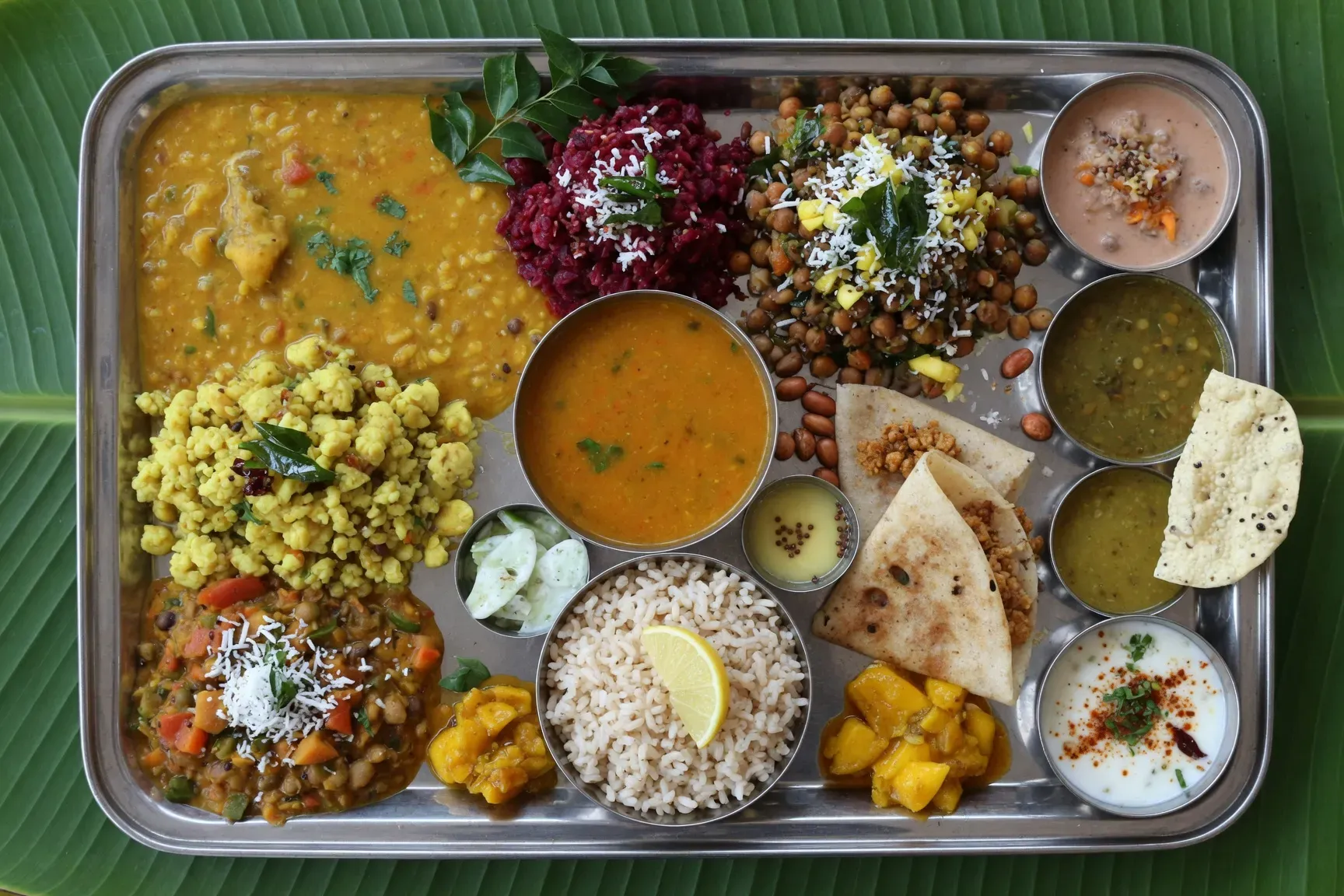
The reality, for women eating from a South Indian or Kerala food tradition, is considerably more encouraging. The South Indian vegetarian diet is one of the most nutritionally diverse plant-based food traditions in the world. The combination of rice, lentils, legumes, vegetables, fermented foods, and dairy (for vegetarians) that forms the backbone of everyday South Indian cooking already covers a significant amount of what pregnancy nutrition requires — not through intentional engineering, but through generations of accumulated food wisdom.
That said, there are specific nutrients where plant-based diets in pregnancy require more attention: protein completeness, iron, calcium, vitamin B12, DHA, and iodine. Understanding these — and knowing exactly which foods in a South Indian kitchen address them — is the practical work this article does.
Protein in pregnancy: what “complete” actually means
Protein is made up of amino acids, and the human body requires nine essential amino acids that it cannot produce itself — these must come from food. A “complete protein” is one that contains all nine in sufficient amounts.
Animal proteins — meat, fish, eggs, dairy — are complete proteins. Plant proteins are often limited in one or more amino acids, which is where the concept of “complementary proteins” comes from: combining different plant sources across the day provides all nine essential amino acids even if no single source contains them all.
The important clarification — one that nutritional science has shifted on in recent decades — is that complementary proteins do not need to be eaten in the same meal. They simply need to be eaten in the same day. The idea of carefully combining foods at every meal is an older recommendation that the evidence no longer fully supports.
In practice, a South Indian vegetarian diet that includes a variety of lentils, legumes, grains, dairy, nuts, and seeds across the day will provide complete protein without requiring any special planning at the meal level.
How much protein does pregnancy require?
Protein needs increase during pregnancy, particularly in the second and third trimesters when fetal growth is most significant. The general recommendation is approximately 70–100 grams of protein per day during pregnancy, up from around 46 grams in a non-pregnant adult.
This sounds like a lot, but it adds up quickly when you’re eating a full South Indian diet:
- One cup of cooked dal — approximately 15–18 grams of protein
- One cup of cooked chickpeas or rajma — approximately 15 grams
- One cup of curd — approximately 8–10 grams
- One egg — approximately 6 grams
- 100 grams of paneer — approximately 18 grams
- One cup of cooked tofu — approximately 20 grams
- One cup of cooked rice — approximately 4–5 grams
- Two medium rotis — approximately 5–6 grams
- A handful of nuts (30 grams) — approximately 5–7 grams
A meal of dal, rice, a vegetable preparation, and curd provides 35–40 grams of protein. Two such meals, plus breakfast and snacks, can reasonably reach the daily target.
The best vegetarian protein sources in a South Indian kitchen
Lentils and legumes — the foundation
- Masoor, moong, chana, urad, toor dal — all excellent protein sources; the variety you cook most often is fine; rotating between them provides slightly different amino acid profiles
- Whole chickpeas (kondakadalai) — higher in protein than most dals; excellent as a curry, in chaats, or added to rice
- Rajma (kidney beans) — substantial protein content, filling, a good second-trimester staple
- Black-eyed peas (lobiya) — protein and iron together; underused in pregnancy conversations
- Soya beans and soya-based products — soya is the most complete plant protein source available; tofu, soya chunks (meal maker), and tempeh are all excellent; edamame is useful as a snack
Dairy (for vegetarians)
- Paneer — dense protein source; very versatile across curry, stir-fry, and snack preparations
- Curd (yogurt) — protein plus probiotics plus calcium; eaten at the end of most South Indian meals and a reliable daily contribution
- Buttermilk (chaas / moru) — lower in protein than curd but easy to drink in quantity; useful hydration and protein contribution
- Milk — a glass of milk (dairy or fortified plant-based) provides around 8 grams of protein alongside calcium and B12
For vegan women, fortified plant milks — soy milk is the best protein match for dairy milk — provide protein and, when fortified, calcium and B12.
Eggs (for lacto-ovo vegetarians)
Eggs provide complete protein, B12, DHA, and choline — a nutrient important for fetal brain development that is not widely discussed. If eggs are part of your vegetarian diet, they are a genuinely valuable pregnancy food. Boiled, scrambled, or as an egg curry, they are an easy daily protein source.
Nuts and seeds
- Pumpkin seeds — protein plus iron; easy to add to porridge or eat as a snack
- Hemp seeds — one of the few plant sources of complete protein; contain all nine essential amino acids; useful sprinkled on food
- Almonds, cashews, walnuts — protein and healthy fat; good daily snack
- Sesame seeds (ellu) — protein plus calcium; present in chutneys, laddoos, and rice dishes
Nutrients that require specific attention in a vegetarian or vegan pregnancy
Iron
Already covered in depth elsewhere in this guide — but the key points for vegetarian and vegan women:
Non-haem iron from plants is absorbed less efficiently than animal-source haem iron. The practical strategies are: eat iron-rich plants (dal, leafy greens, seeds) consistently; pair them with vitamin C at every meal (lemon on food, citrus fruit alongside a meal); avoid tea and coffee immediately around mealtimes; and cook in cast iron where possible.
Your provider will monitor iron levels and advise on supplementation. Most vegetarian and vegan women in pregnancy need an iron supplement regardless of dietary iron intake, because the requirements are simply very high.
Calcium
For vegetarian women who eat dairy, calcium is generally manageable through curd, milk, paneer, and ragi combined. For vegan women, the sources are:
- Ragi — the most important non-dairy calcium source in a South Indian context
- Fortified plant milk — soy, almond, or oat milk fortified with calcium provides amounts comparable to dairy
- Tofu set with calcium sulphate — the setting agent used makes this tofu genuinely calcium-rich
- Sesame seeds — high in calcium; chutney, laddoo, and rice preparations all help
- Drumstick (moringa) — calcium-dense; used in sambar across South India
- Amaranth (cheera) — calcium-rich leafy green common in Kerala cooking
- Almonds — moderate calcium; useful as a daily snack
Vegan women in pregnancy should discuss calcium supplementation specifically with their provider, as meeting requirements through food alone can be difficult.
Vitamin B12
This is the nutrient where vegetarian and especially vegan pregnancies require the most attention. Vitamin B12 is found almost exclusively in animal products — meat, fish, dairy, and eggs. It is critical for nervous system development in your baby and for preventing a type of anaemia in you.
Vegetarians who eat dairy and eggs will get some B12 but may still not reach pregnancy levels through food alone. Vegan women will almost certainly be deficient without supplementation.
If you are vegetarian or vegan, B12 supplementation is not optional during pregnancy. Discuss the right form and dose with your provider. Many prenatal vitamins include B12, but check the amount and confirm it is sufficient for your diet.
Fortified foods — nutritional yeast (if available), fortified plant milks, some breakfast cereals — contribute B12 but are not reliable as the sole source for a pregnant woman.
DHA (omega-3 fatty acid)
DHA is critical for your baby’s brain and eye development, particularly in the third trimester. It is found most readily in oily fish — which is why fish-eating is often specifically recommended in pregnancy.
For vegetarians and vegans, the options are:
- Algae-based DHA supplements — this is the most reliable option; algae is the original source from which fish accumulate DHA, so algae-derived supplements provide it directly without the need for fish. This is a supplement worth specifically seeking out and discussing with your provider.
- Flaxseeds, chia seeds, walnuts — these provide ALA (alpha-linolenic acid), a plant-based omega-3 that the body can partially convert to DHA. The conversion rate is low and variable, so these sources alone are not sufficient, but they are a useful complement to an algae supplement.
Including flaxseeds in your daily porridge or smoothie, and walnuts as a regular snack, is worthwhile — but an algae-based DHA supplement remains the most reliable approach for vegetarian and vegan women.
Iodine
Iodine is important for thyroid function and fetal brain development. It is found primarily in seafood and dairy. Vegan women who do not eat dairy or seafood are at particular risk of iodine deficiency in pregnancy.
Iodised salt is one source, but its iodine content can be variable. Vegan women should discuss iodine supplementation specifically with their provider — it is often included in prenatal vitamins but worth confirming.
What a well-nourished vegetarian pregnancy looks like day-to-day
It doesn’t look like a meticulously planned spreadsheet. It looks like:
Dal with every main meal. A vegetable preparation that includes leafy greens most days. Curd or buttermilk as a regular accompaniment. Ragi in porridge, dosa, or roti a few times a week. Eggs most days, if they are part of your diet. A daily handful of nuts and seeds. Citrus fruit or lemon on food consistently. Fortified plant milk if dairy isn’t part of your diet.
And supplementation — a good prenatal vitamin, B12 if needed, algae-based DHA, and whatever else your provider advises based on your blood tests.
The South Indian vegetarian diet is genuinely well-suited to pregnancy. With a little specific attention to the nutrients where plant-based diets need support, it provides the nutritional foundation that pregnancy requires — without needing to become something unrecognisable from what you’ve always eaten.
This article is for general educational purposes only and does not replace personalised nutrition or medical advice. Always consult your doctor, midwife, or a qualified healthcare professional — ideally a registered dietitian with experience in plant-based pregnancy nutrition — for personalised guidance.