Pregnancy Cravings and Indian Food: What Your Body Might Be Telling You
What pregnancy cravings actually mean, what the science says, and how common Indian food cravings connect to your nutritional needs.
Pregnancy cravings have an almost mythological status — the midnight pickle run, the bizarre combinations, the sudden passion for a food you never particularly liked before.
In South Asian households, cravings come with their own cultural weight. There is the dohaad — the traditional concept of a pregnant woman’s cravings as meaningful signals, sometimes seen as the baby’s wishes, and the belief that satisfying them matters not just for the mother’s comfort but for the pregnancy itself. There is the practice of family members taking cravings seriously, making sure a pregnant woman gets what she’s asking for, and the folk wisdom that ignoring cravings can have consequences.
Modern nutritional science has a more measured take on all of this — but not an entirely dismissive one. Some cravings do seem to have biological logic behind them. Others are less clearly connected to nutritional need. And pica — the craving for non-food substances — is a specific phenomenon that warrants attention.
This article is about understanding what pregnancy cravings might actually mean, what the science does and doesn’t support, and how to approach some of the most common Indian food cravings in a way that is both satisfying and sensible.
What causes pregnancy cravings?
The honest answer is that science doesn’t fully understand pregnancy cravings yet. Several theories exist:
Hormonal changes — the rapid hormonal shifts of early pregnancy, particularly in oestrogen and hCG levels, affect taste and smell perception significantly. Foods that previously seemed ordinary may smell overwhelming; foods you never wanted may suddenly seem essential. This is likely part of why cravings and aversions often appear simultaneously in the first trimester.
Nutritional signalling — there is a plausible argument that some cravings reflect genuine nutritional needs. A craving for red meat in a woman with low iron levels, or a craving for dairy in a woman whose calcium needs have increased, fits a pattern of the body communicating a deficiency. This theory is appealing and has some support, but it is not universally proven — not every craving maps neatly to a nutritional need.
Psychological and emotional factors — pregnancy is an emotionally complex experience, and food is deeply associated with comfort, safety, and cultural identity. Cravings for familiar foods — especially foods associated with childhood or home — may reflect emotional needs as much as physical ones.
Evolutionary hypotheses — some researchers suggest that aversions to certain foods (particularly meat and bitter vegetables in early pregnancy) may be a protective mechanism, reducing exposure to potential pathogens or toxins at the moment when the embryo is most vulnerable. The flip side of this — cravings for safe, energy-rich foods — would fit the same framework.
Common Indian food cravings in pregnancy — and what they might mean
Sour foods: raw mango, tamarind, lemon, amchur
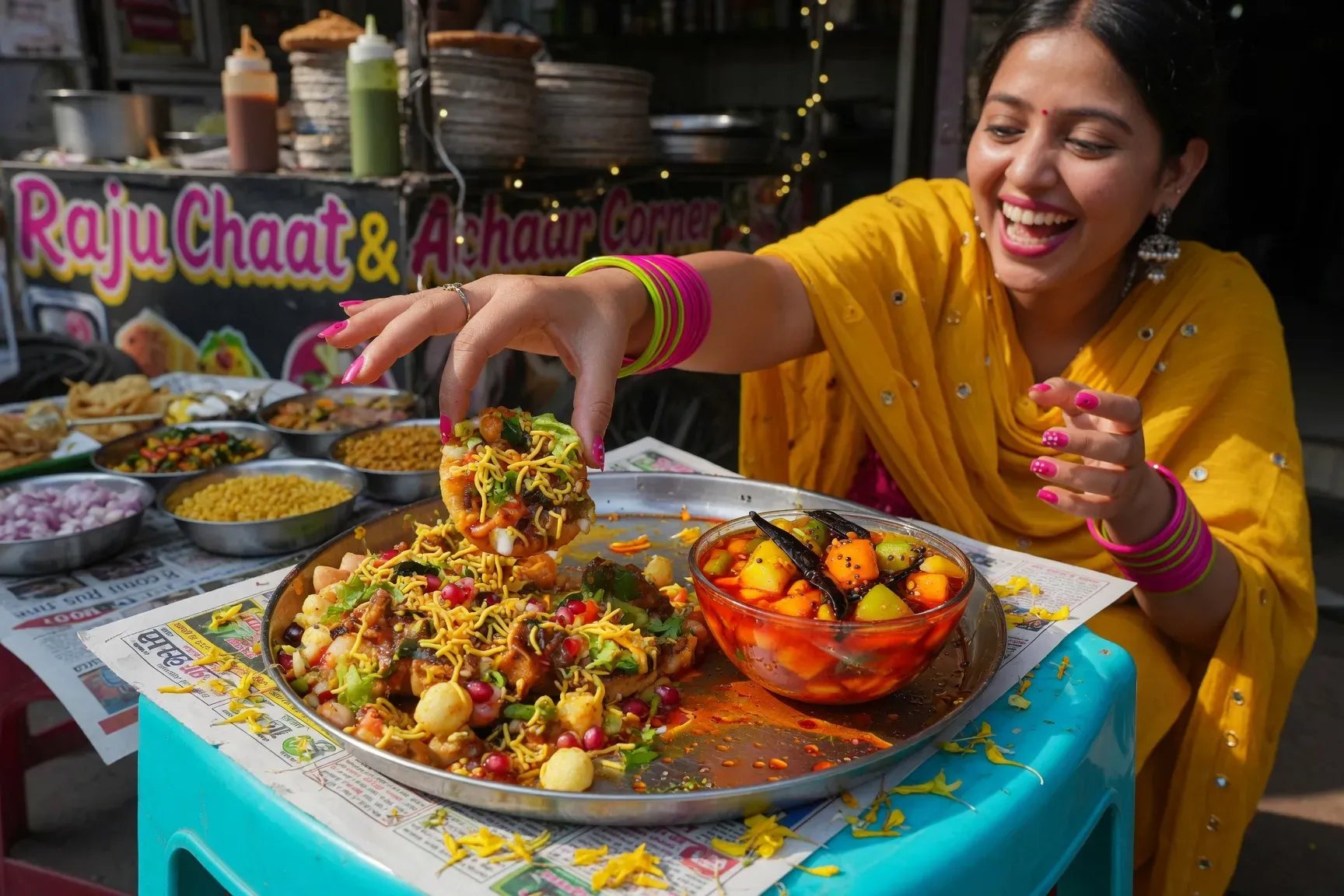
This is one of the most classically reported pregnancy cravings, across cultures and food traditions. In South Indian households, it often manifests as a sudden intense desire for raw mango (manga), tamarind-heavy rasam, pickles (achar), or just lemon juice on everything.
Sour cravings in pregnancy are extremely common in the first trimester, which is interesting because this coincides with the period when nausea is most intense. There is some evidence that sour and tart flavours can reduce nausea — which may be part of why this craving appears when it does.
From a nutritional perspective: sour fruits like raw mango and citrus are high in vitamin C, which is useful for iron absorption during pregnancy. Tamarind provides iron. There is plausible nutritional logic here, even if the craving likely also has comfort and flavour-driven roots.
Satisfying it sensibly: Raw mango, lemon, tamarind in cooking, and citrus fruits are all fine and often nutritionally useful. Commercially prepared pickles (achar) can be very high in salt — fine occasionally, but worth moderating if you’re eating a lot of them regularly. Homemade pickles with lower salt content are a better option if pickles are becoming a daily habit.
Spicy food
Craving intensely spicy food in pregnancy is common, though it comes with the practical issue that chilli-heavy food tends to worsen heartburn — already common in the second and third trimesters.
Spicy food cravings don’t have a clear nutritional explanation beyond the pleasurable sensory experience and the comfort association with familiar home cooking. If spicy food doesn’t cause you discomfort, enjoying it in reasonable amounts is fine. If heartburn is already a problem, moderating the heat level is worth considering — not for the baby’s sake, but for yours.
Sweet foods: halwa, payasam, jaggery, ladoo
Sweet cravings are very common in pregnancy, particularly in the second trimester when appetite and energy demands are both increasing. The body’s increased calorie needs may partly explain the drive toward energy-dense sweet foods.
The nutritional picture varies by what you’re craving. Payasam made with rice or broken wheat and jaggery, ragi laddoo with nuts, and fruit-based sweets all provide something beyond sugar — fibre, iron, calcium, or protein. Commercially produced sweets and mithai tend to be very high in refined sugar and fat without significant nutritional contribution.
Satisfying it sensibly: Jaggery-based sweets are not significantly more nutritious than refined sugar sweets in the quantities consumed as treats, but they do have trace minerals that refined sugar lacks. A small piece of jaggery, a ragi laddoo, or a serving of homemade payasam is a reasonable way to address a sweet craving. Daily large portions of very sweet mithai are worth moderating, particularly if gestational diabetes has been diagnosed or is a risk.
Ice, cold water, and cold foods
A strong craving for very cold foods — ice water, cold fruit, chilled curd — is extremely common in pregnancy, particularly in the later trimesters in warm climates. In Kerala, where summer temperatures are significant, this craving is particularly understandable.
There is no nutritional concern with cold foods in pregnancy — the folk belief that cold food harms the pregnancy or causes a cold in the baby is not supported by evidence. A craving for ice specifically (as opposed to cold drinks) can sometimes indicate iron deficiency anaemia, so if you find yourself wanting to chew ice directly, mention it to your provider and ask about your iron levels.
Dal rice and simple comfort food
A craving for the simplest, most familiar version of home cooking — plain dal and rice, a thin rasam and rice, curd rice — is quietly one of the most common experiences of South Indian pregnancy. It doesn’t get the attention of more dramatic cravings, but it is very real.
This isn’t mysterious. The digestive sensitivity of pregnancy makes simple, familiar food feel safe and manageable. The emotional weight of pregnancy makes comfort food appealing. And the foods that qualify as comfort food in South Asian households happen to be genuinely nourishing — plain dal and rice and rasam is excellent pregnancy nutrition in one of its least complicated forms.
There is nothing to analyse here. If your body is asking for plain dal rice, make plain dal rice. It’s one of the best things you can eat.
Unusual non-food cravings (pica)
Pica is a specific condition involving cravings for non-food substances — soil or clay (geophagia), chalk, raw rice, charcoal, ice in large quantities, laundry starch, and sometimes other non-edible materials. It is more common in pregnancy than outside it, and while it has traditionally been dismissed or treated as a cultural practice, it is now understood as a medical phenomenon worth taking seriously.
Pica is strongly associated with iron deficiency anaemia in pregnancy. If you are experiencing cravings for non-food substances, tell your provider. This is not something to be embarrassed about — it is a clinical signal that your body may be significantly iron-deficient, and addressing the deficiency often resolves the cravings.
Consuming non-food substances during pregnancy carries real risks — soil can contain parasites and heavy metals; chalk and certain other substances can interfere with nutrient absorption. Please speak to your provider if this is something you’re experiencing.
The dohaad and taking cravings seriously
The traditional Indian concept of dohaad — the pregnant woman’s cravings as something meaningful, to be respected and satisfied — has more wisdom in it than the dismissive modern view often allows.
Pregnancy is a state of significant physical demand, and cravings are the body’s communication system working harder than usual. Not every craving maps to a specific nutritional gap, but many do. The practice of taking a pregnant woman’s food requests seriously — ensuring she gets what she asks for, not making her negotiate for it — reflects a sound intuition that what she wants matters for her wellbeing.
The practical middle path is this: satisfy cravings that are for real food, thoughtfully. If the craving is for something very salty, very sugary, or very processed in quantities that would be concerning, moderate rather than eliminate. If the craving is for a non-food substance, seek medical advice. And if the craving is for dal rice, mango, tamarind rasam, or cold curd — eat it, without guilt, and know that your body’s instincts in this case are probably right.
This article is for general educational purposes only and does not replace personalised nutrition or medical advice. Always consult your doctor, midwife, or a qualified healthcare professional about your specific dietary needs during pregnancy.