
Umbilical Cord Care for Newborns: Simple, Clean, and Not Complicated
A practical guide to umbilical cord stump care — what to do, what not to do, how long it takes to fall off, and signs that need medical attention.
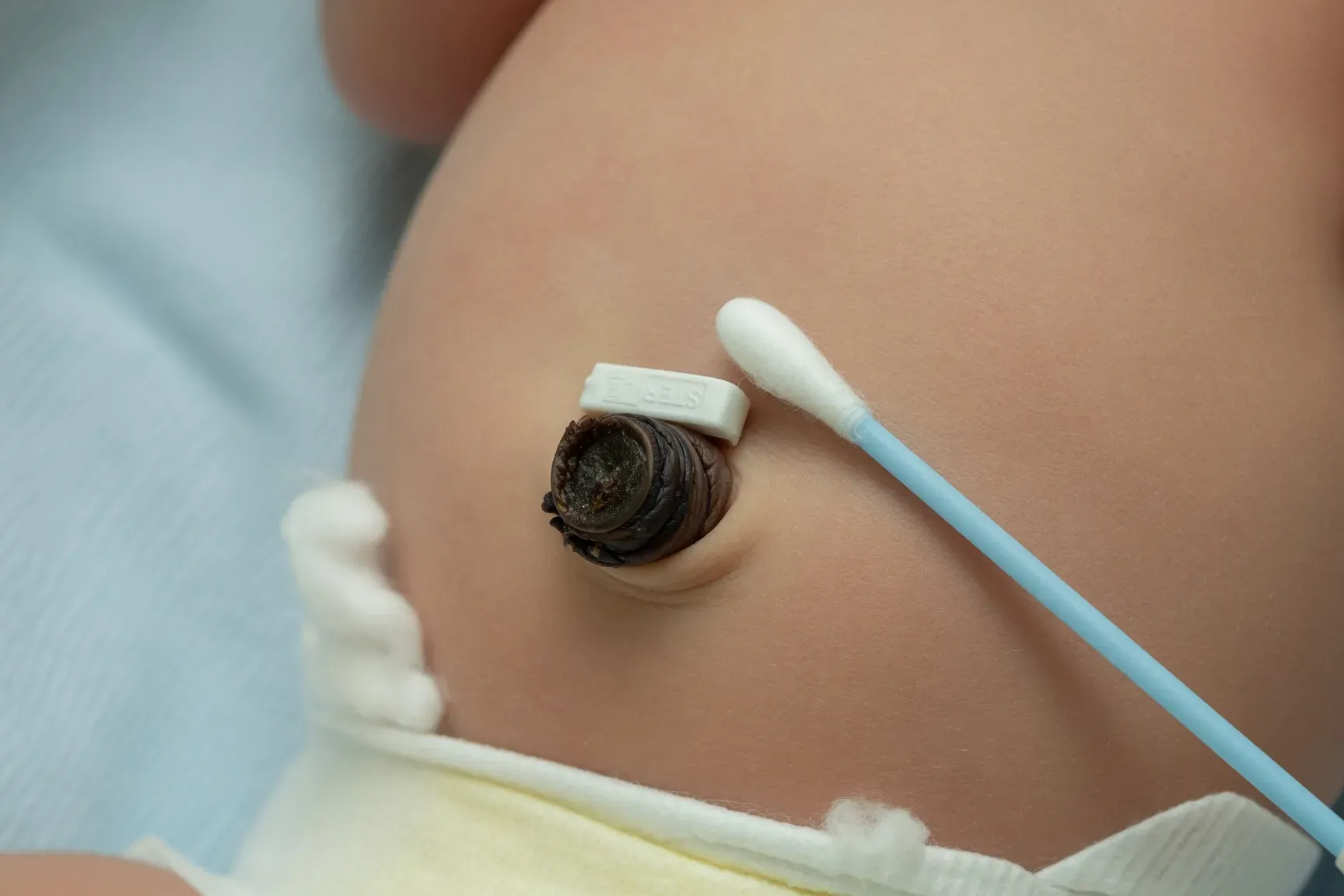
The umbilical cord stump — the small dried remnant of what was, for nine months, your baby’s lifeline — is one of the things new parents handle most nervously and need to worry least about.
It looks alarming if you don’t know what to expect: yellowish-green when first clamped, gradually drying to dark brown or black, shrivelling and hardening over one to three weeks before falling off. The appearance is sometimes described as “gross” by first-time parents, and the anxiety about touching it, cleaning around it, and knowing when it has gone wrong is real.
The good news is that umbilical cord care is simple, and the principle is essentially one thing: keep it dry and clean.
What to do
Keep it dry. This is the primary rule. Moisture slows the drying and separation process and creates conditions for bacterial growth. Keep the stump exposed to air as much as possible.
Fold the nappy below the stump. Most disposable nappies have a notch at the front for this purpose. For newborns in cloth nappies, fold the front down. This prevents urine from contaminating the stump area and keeps the stump dry.
Sponge bath rather than tub bath until it falls off. Avoid submerging the baby in water until the cord has fallen off and the navel has fully healed — typically one to three weeks. Clean the rest of the baby with a damp cloth or sponge and keep the cord area dry.
If it gets dirty. If the cord area gets contaminated — a nappy leaks, stool gets near it — clean gently with a cotton swab dampened with clean water and dry thoroughly afterward. Do not use alcohol, antiseptic, or powder routinely — current guidance from paediatric organisations recommends dry cord care (keeping it clean and dry without applying substances) as the recommended approach for full-term healthy babies in hygienic settings.
Let it fall off naturally. Do not pull on the cord stump, even when it appears to be hanging by a thread. It will separate on its own when it is ready.
What not to do
Do not apply anything routinely. In India, it is common in some families to apply turmeric, coconut oil, or other traditional substances to the cord stump. In home birth or lower-resource settings, traditional cord care practices were developed in contexts where clean water and sterile facilities were not consistently available. In a typical urban or semi-urban Indian hospital delivery context, dry cord care — clean and dry, nothing applied — is the current recommended approach. If there is a strong family expectation around specific traditional cord care, discuss it with your paediatrician.
Do not cover it with the nappy. The nappy should be below the cord, not covering it.
Do not try to speed up separation by twisting or pulling.
How long it takes
The cord stump typically falls off between one and three weeks after birth, though it can take up to four weeks in some babies. There is normal variation and the timing does not indicate a problem unless it is accompanied by other concerning signs.
After the stump falls off, there may be a small amount of dried blood or slight moisture at the navel — this is normal. The navel heals over the following days.
Signs that need medical attention
The following signs indicate possible infection of the cord stump (omphalitis) and require prompt medical evaluation:
- Redness or swelling spreading onto the skin surrounding the stump (not just at the base of the stump itself)
- Warmth in the surrounding skin
- Yellow or foul-smelling discharge
- The baby appearing unwell — fever, poor feeding, unusual lethargy
- Significant bleeding from the stump
A small amount of dried blood when the cord falls off is normal. Active bleeding from the stump that doesn’t stop with gentle pressure requires immediate medical attention.
An umbilical granuloma — a small, moist, pink nodule that sometimes remains at the navel after the cord has fallen off — is common and not an infection. It typically resolves on its own or with simple treatment by your paediatrician.
This article is for general educational purposes only. If you have concerns about your baby’s umbilical cord care or notice signs of possible infection, consult your paediatrician promptly.