
Traditional Kerala Pregnancy Foods: Which Ayurvedic Recommendations Have Modern Support
An honest look at traditional Kerala and Ayurvedic pregnancy food advice — what modern nutrition science supports, what is harmless, and what to be cautious about.
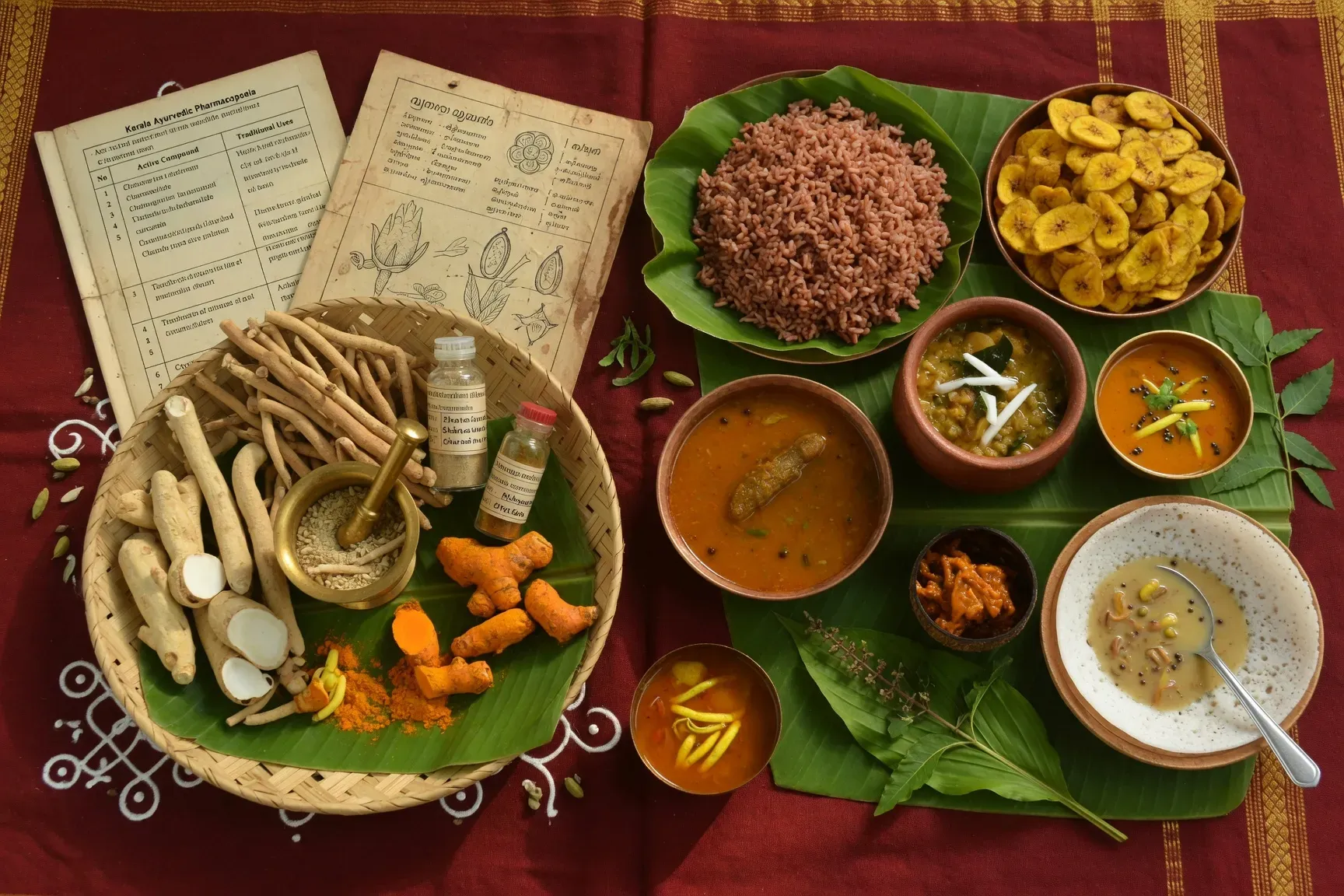
If you are pregnant in Kerala — or pregnant anywhere with a Kerala family around you — you will receive food advice. A lot of it. From your mother, your mother-in-law, your aunts, your neighbours, possibly the woman at the vegetable market who noticed your bump.
Some of it will be exactly right. Some of it will be harmless but not particularly evidence-based. And some of it, in rare cases, may be worth questioning gently with your doctor.
This guide attempts to sort through the most common traditional Kerala and Ayurvedic recommendations for pregnancy food — honestly, without dismissing the tradition or ignoring the science.
Where traditional Kerala pregnancy food wisdom comes from
Kerala has one of the richest Ayurvedic traditions in India. The classical Ayurvedic texts — Charaka Samhita, Ashtanga Hridayam, and others — contain detailed guidance on pregnancy nutrition (called Garbhini Paricharya) covering what to eat, what to avoid, and what herbal preparations support each month of pregnancy.
Ashtanga Hridayam, in particular, was compiled in Kerala and remains the foundational text of the Kerala Ayurvedic tradition. The food recommendations that Kerala families pass down — often without knowing their textual origin — frequently trace back to these classical sources.
This is worth understanding because it means traditional Kerala pregnancy food advice is not arbitrary. It comes from a coherent system of medicine with thousands of years of observational knowledge. That doesn’t mean every recommendation is correct by modern standards — but it does mean it deserves to be evaluated carefully rather than dismissed wholesale.
Recommendations with strong modern support
Ragi (finger millet)
Traditional advice: Ragi porridge (ragi kanji or ragi koozhv) has been recommended for pregnant and postpartum women in Kerala for generations. It is considered strengthening, easily digestible, and particularly good for building strength in the later months.
Modern support: Strong. Ragi is one of the richest plant-based sources of calcium available — 100g of ragi contains more calcium than the same amount of milk. It is also a good source of iron, fibre, and complex carbohydrates that provide sustained energy. The traditional recommendation is well-founded.
Coconut and coconut water
Traditional advice: Coconut in various forms — fresh coconut, coconut oil used in cooking, coconut water — is deeply embedded in Kerala pregnancy food culture. Coconut water in particular is recommended for hydration and as a cooling drink during hot weather.
Modern support: Good, with nuance. Coconut water is a natural source of electrolytes — potassium, magnesium, sodium — and is a genuinely useful hydration option during pregnancy, particularly when nausea makes plain water difficult to keep down. Coconut used in cooking provides medium-chain fatty acids. The traditional use is reasonable, though coconut water should supplement rather than replace plain water.
Dal, lentils, and legumes
Traditional advice: Dal in various forms — parippu curry, sambar, moong dal preparations — is central to Kerala pregnancy food recommendations. It is considered easily digestible and nutritionally complete.
Modern support: Strong. Lentils and legumes are excellent sources of plant protein, folate, iron, and fibre. They are among the most nutritionally valuable foods available during pregnancy, and the Kerala tradition of eating dal daily is genuinely beneficial.
Drumstick (Muringa / Moringa)
Traditional advice: Drumstick leaves and drumstick curry are strongly recommended in traditional Kerala pregnancy food advice. Drumstick leaves in particular are considered exceptionally nourishing for pregnant women.
Modern support: Strong. Moringa leaves are extraordinarily nutrient-dense — they are a rich source of iron, calcium, folate, vitamin C, and protein. The traditional recommendation that drumstick is especially valuable during pregnancy has strong nutritional backing. Adding drumstick leaves to curries, soups, or dal is genuinely beneficial.
Sesame (Til / Ellu)
Traditional advice: Sesame — used in chutneys, rice dishes, and sweets — is recommended as a source of calcium and strength.
Modern support: Good. Sesame seeds are a rich source of calcium, iron, and healthy fats. The traditional use is nutritionally supported.
Ghee in moderation
Traditional advice: Ghee is recommended throughout pregnancy in Ayurvedic tradition, with specific preparations (medicated ghees) used in certain months. It is considered nourishing, lubricating for the tissues, and supportive of the baby’s development.
Modern support: Moderate, with nuance. Ghee is a source of fat-soluble vitamins (A, D, E, K) and provides concentrated energy. In the amounts used in typical Kerala cooking, it is not problematic for most pregnancies. The Ayurvedic medicated ghees — preparations like Phala Ghrita — fall outside the scope of modern nutritional science and should be discussed with both your doctor and an Ayurvedic physician before use during pregnancy.
Recommendations that are harmless but limited in evidence
Eating almonds soaked overnight
Traditional advice: Soaked almonds are widely recommended in Indian pregnancy tradition for brain development and general strength.
Modern evidence: Almonds are nutritious — they provide protein, healthy fats, vitamin E, and magnesium. But the specific claim that soaking them overnight significantly changes their nutritional profile or particularly benefits fetal brain development is not well-supported. Eating almonds is good. The soaking requirement is not backed by strong evidence, but it causes no harm.
Saffron milk
Traditional advice: Milk with saffron (kesar) is widely recommended in Indian and Ayurvedic pregnancy tradition, often with the belief that it affects the baby’s complexion.
Modern evidence: Saffron contains compounds with antioxidant properties and some research suggests it may have mild mood-supporting effects. The claim about complexion has no scientific basis — the baby’s skin tone is determined by genetics, not by what the mother drinks. However, warm saffron milk in small amounts is not harmful, and if it is emotionally comforting or helps with sleep, there is no reason to avoid it.
Avoiding cold foods and cold water
Traditional advice: Cold water and cold foods are often discouraged in traditional Kerala and Ayurvedic pregnancy advice, based on the principle that cold disrupts digestive fire (agni).
Modern evidence: There is no evidence that cold water or cold foods are harmful during pregnancy. Staying hydrated is important, and if cold water is more comfortable to drink — especially during nausea or hot weather — it is perfectly fine. This is one area where traditional advice can safely be set aside.
Recommendations to be cautious about
Papaya
Traditional advice: Unripe papaya (raw papaya or green papaya) is traditionally avoided during pregnancy in Kerala and across India, particularly in the first trimester.
Modern evidence: This traditional caution has some scientific basis. Unripe papaya contains latex and high concentrations of papain — an enzyme that may stimulate uterine contractions. In large amounts, unripe papaya is best avoided during pregnancy, particularly in the first trimester. Fully ripe papaya in moderate amounts is generally considered safe and is a good source of vitamins A and C. When in doubt, ask your doctor.
Excessive use of certain herbs and herbal preparations
Traditional advice: Various herbal preparations are used in Ayurvedic pregnancy care, including specific herbal teas and medicated preparations.
Modern caution: Some herbs that are safe in cooking amounts are potentially harmful in concentrated supplemental doses during pregnancy. Before using any Ayurvedic herbal preparation — beyond the normal culinary use of spices in cooking — discuss it with your doctor. This is not a dismissal of Ayurveda but a recognition that pregnancy changes how substances affect the body, and that concentrated herbal preparations can have pharmacological effects.
Raw or partially cooked preparations
Some traditional preparations involve raw or lightly processed ingredients. Standard pregnancy food safety guidelines — avoiding raw meat, raw eggs, unpasteurised dairy — apply regardless of whether a food is traditional. Pregnancy changes immune function and increases susceptibility to certain foodborne illnesses.
The bigger picture
Traditional Kerala pregnancy food wisdom, taken as a whole, reflects a sophisticated understanding of nutrition developed over centuries of careful observation. The emphasis on iron-rich foods, calcium from ragi and sesame, easily digestible preparations, and warm nourishing meals during pregnancy is well-aligned with what modern nutrition science recommends.
Where to exercise care is not with the broad traditional dietary pattern — that pattern is genuinely good — but with specific claims, specific preparations, and the areas where traditional and modern medicine approach the same thing differently.
The best approach is to eat the Kerala diet you grew up with, add the nutrients your doctor identifies as needing supplementation, follow standard pregnancy food safety guidelines, and discuss any specific Ayurvedic preparations with both your Ayurvedic practitioner and your obstetrician. These systems can work together. They don’t have to be in opposition.
This article is for general educational purposes only and does not replace advice from your doctor, midwife, or qualified healthcare professional. Always consult your provider before making significant changes to your diet or starting any herbal or Ayurvedic preparation during pregnancy.