Postpartum Hair Loss: Why It Happens and When It Stops
An honest guide to postpartum hair loss — why it happens, when it starts, when it stops, what helps, and what is worth worrying about versus what is not.
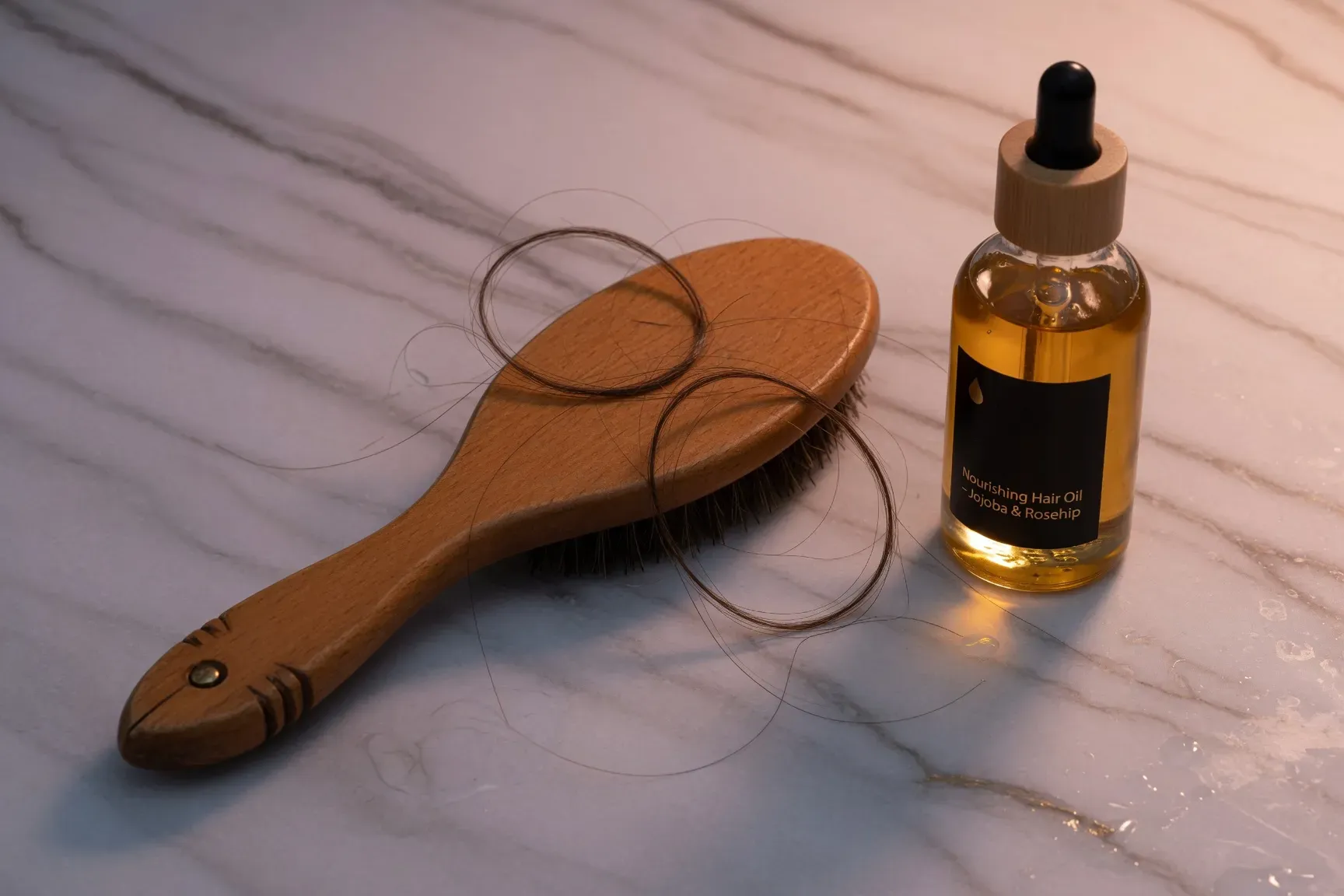
Somewhere between two and four months after birth, many new mothers notice something alarming: hair. Everywhere. In the shower drain. On the pillow. Coming out in handfuls when they run their fingers through it. In India, where thick, long hair is deeply tied to ideas of femininity and beauty, the emotional impact of postpartum hair loss can be significant — out of proportion to what is actually happening, because what is actually happening is normal and temporary, but alarming in the moment.
This guide explains what is really going on, why it is not as catastrophic as it feels, and what — if anything — you can do about it.
The biology of what is happening
During pregnancy, elevated oestrogen levels extend the active growth phase of hair (the anagen phase), causing much less hair than usual to enter the resting and shedding phase (the telogen phase). The result is the famously thick, lush pregnancy hair that many women enjoy in their second and third trimesters.
After birth, oestrogen levels drop rapidly. The hair that was held in the active phase during pregnancy now enters the resting phase all at once and begins to shed — in significantly larger amounts than normal because so much more hair is cycling through this phase simultaneously. This is called telogen effluvium, and it is not hair loss in the clinical sense. It is the hair you would have lost gradually over the nine months of pregnancy, being shed in a compressed period.
The shedding typically begins between two and four months after birth and peaks around three to four months postpartum. Most women find that shedding begins to slow noticeably by six months after birth, and hair returns to its normal density by nine to twelve months for most women.
What it looks like in practice
The volume of hair loss can be genuinely shocking. It is common to lose 300–400 strands per day during peak postpartum shedding, compared to the 50–100 strands per day that is normal outside of pregnancy. In women with long or thick hair, this can look like dramatic handfuls.
The hair loss is typically diffuse — spread evenly across the scalp rather than concentrated in patches. Some women notice thinning most noticeably at the temples and hairline, which can create a visible change in the appearance of the hairline that feels alarming.
In Indian women with long hair that has been kept in oils and braids during pregnancy, the shedding may be less visible day-to-day but more dramatic when the hair is washed or combed out.
What actually helps
Honest answer: not much can significantly alter the course of postpartum telogen effluvium, because it is a natural hormonal process rather than a problem with your hair itself. However, several things support overall hair health during this period and may minimise the appearance of shedding.
Nutrition matters. Postpartum hair shedding is worsened by nutritional deficiency — particularly iron deficiency, which is common after birth due to blood loss during delivery. If you were anaemic during pregnancy or lost significant blood during birth, iron supplementation may be recommended by your doctor and genuinely helps with hair recovery. Protein intake also matters — hair is made of protein, and adequate dietary protein supports the regrowth phase. Zinc, biotin, and vitamin D deficiencies can also contribute to prolonged or excessive shedding.
Be gentle with your hair. Tight hairstyles that pull on the roots — tight braids, ponytails, heavy oiling routines that weigh down already weakened hair — can increase breakage and worsen the appearance of thinning. Loose styles, gentle handling when wet (when hair is most vulnerable to breakage), and avoiding heat styling during this period are practical measures.
Continue your prenatal vitamin. If you are breastfeeding, continuing a prenatal vitamin or postnatal supplement provides the nutritional support that both lactation and hair recovery need. Some doctors specifically recommend continuing iron supplementation postpartum for this reason.
The coconut oil question. In Kerala and across India, coconut oil scalp massage is deeply embedded in hair care tradition and is widely recommended postpartum. There is no strong clinical evidence that coconut oil changes the course of telogen effluvium, but scalp massage in general improves circulation to the hair follicles and has some support in the research for promoting hair regrowth. If coconut oil scalp massage is part of your routine and feels good, continue it. It is not going to make things worse.
What is not worth worrying about
Biotin supplements in large doses. Biotin is heavily marketed for hair loss, including postpartum hair loss. If you have a genuine biotin deficiency, supplementation helps — but biotin deficiency is actually rare. For most postpartum women, high-dose biotin supplements do not significantly change the timeline of shedding. They are unlikely to harm anything, but they are also unlikely to be the solution.
Expensive hair growth serums and treatments. The postpartum hair loss market is well-developed and aggressively marketed. Most products claiming to stop postpartum shedding are capitalising on genuine distress about a process that will resolve on its own. Save your money.
Worrying that it won’t stop. The most common anxiety about postpartum hair loss is that it will continue and lead to permanent thinning. For the vast majority of women, it does not. Telogen effluvium resolves as hormones stabilise, and regrowth — often visible as the characteristic baby hairs along the hairline — begins within a few months of peak shedding.
When to see a doctor
Postpartum hair loss that continues beyond twelve months after birth, hair loss that is patchy rather than diffuse, or hair loss accompanied by other symptoms — extreme fatigue, cold intolerance, weight changes, mood changes — warrants medical evaluation. Postpartum thyroiditis, which affects the thyroid gland in the months after birth, can cause hair loss that continues beyond the normal telogen effluvium timeline and looks similar. Iron deficiency anaemia that was not adequately treated postpartum can also prolong shedding.
If your hair loss feels out of proportion to what is described here, or if it is continuing past the expected timeline, a blood test checking iron levels, thyroid function, and other markers is a reasonable next step and worth asking your doctor about at your postpartum check.
The emotional dimension
In Indian culture, where hair — particularly long, thick, well-maintained hair — carries significant cultural and aesthetic weight, postpartum hair loss is not just a physical experience. It can feel like a loss of identity at a time when your identity is already undergoing enormous upheaval.
This is worth naming, because it often isn’t. The distress of watching your hair fall out in the weeks after birth, while you are exhausted and recovering and adjusting to new motherhood, is real. It is okay to find it upsetting. It does not mean you are vain or failing to focus on what matters.
What helps, practically and emotionally: knowing that it is temporary, having a loose, comfortable haircut if very long hair is making the shedding more visually dramatic, accepting that your hair will look different for a period and will recover, and being gentle with yourself about the way you look during an extraordinary transition.
This article is for general educational purposes only. If you have concerns about the extent or duration of your postpartum hair loss, speak with your doctor or dermatologist.