
Pelvic Floor Exercises During Pregnancy: Why They Matter and How to Do Them
A clear, practical guide to pelvic floor exercises during pregnancy — what the pelvic floor is, why pregnancy strains it, how to do Kegels correctly, and why they matter beyond the birth.
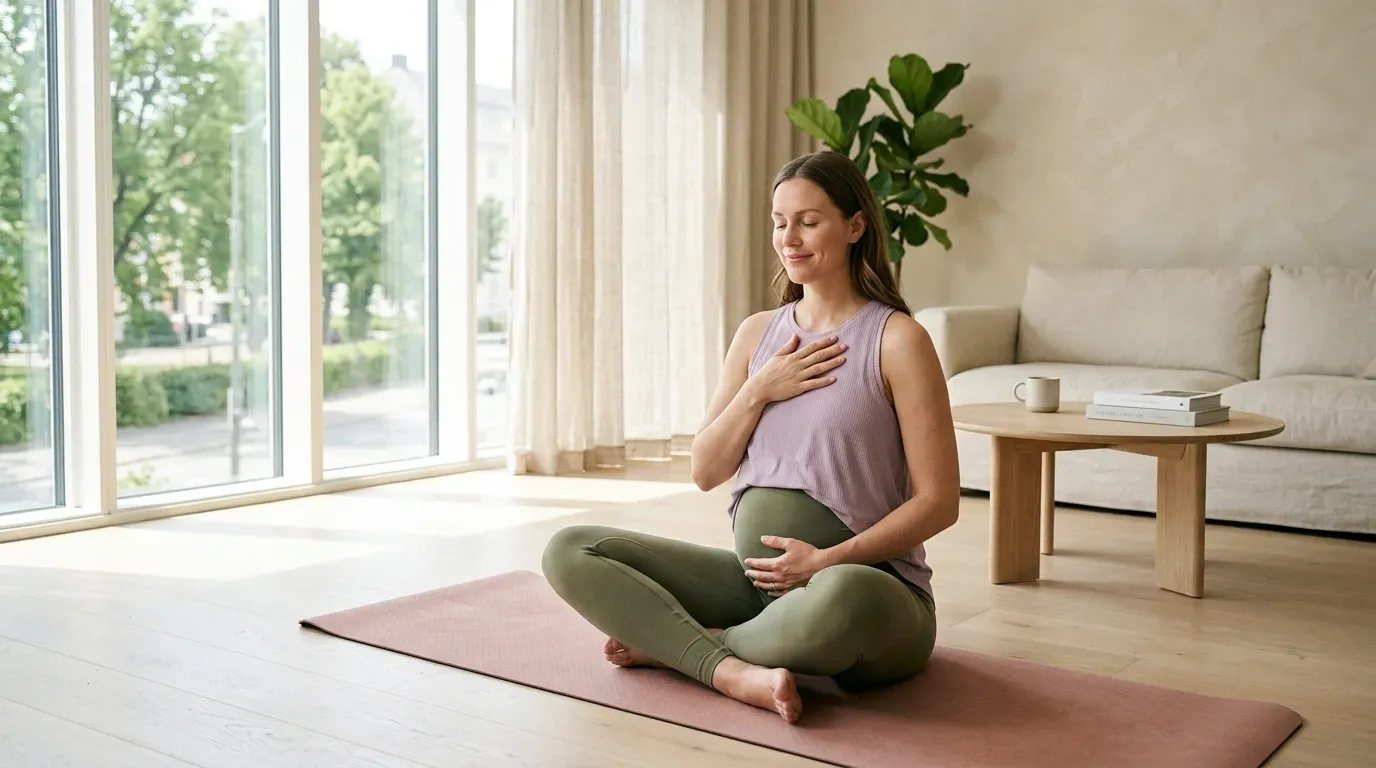
Pelvic floor exercises are among the most consistently recommended aspects of pregnancy care — and among the most consistently underdone. Not because women don’t know they are important, but because they are invisible, uncomfortable to discuss, easy to deprioritise against the more visible demands of pregnancy, and often poorly explained in the antenatal care encounters where they are mentioned.
The result is that many women reach the end of pregnancy — and the postpartum period — with a pelvic floor that is less prepared than it could have been, experiencing leakage, prolapse risk, or pelvic floor dysfunction that could have been significantly reduced by a consistent practice begun earlier.
This article is a clear explanation of what the pelvic floor is, why pregnancy is particularly hard on it, and how to actually do the exercises correctly — not a generic mention that Kegels are important, but a practical, specific guide to building a real practice.
What the pelvic floor is
The pelvic floor is a group of muscles, ligaments, and connective tissue that form a hammock-like structure at the base of the pelvis. It spans from the pubic bone at the front to the tailbone at the back, and from one sitting bone to the other at the sides.
These muscles have several critical functions:
Support. The pelvic floor supports the weight of the bladder, uterus (during pregnancy, an increasingly heavy uterus), and rectum. Without adequate pelvic floor support, these organs can descend toward or through the vaginal opening — a condition called pelvic organ prolapse.
Sphincter control. The pelvic floor muscles wrap around the urethra and anus, giving you the ability to control the release of urine, faeces, and gas. When these muscles are weakened, this control is compromised — producing the leakage that is one of the most common and underreported consequences of pregnancy and childbirth.
Sexual function. Pelvic floor tone contributes to sexual sensation and function for women. Pelvic floor dysfunction affects both hypertonic (too tight) and hypotonic (too weak) states.
Labour and birth. The pelvic floor must be strong enough to support the uterus and baby throughout pregnancy, and flexible enough to relax and open during the second stage of labour. Both strength and flexibility are relevant — which is why pelvic floor preparation for birth includes learning to release the muscles as much as to contract them.
Why pregnancy is particularly hard on the pelvic floor
Weight. The growing uterus and baby place increasing downward pressure on the pelvic floor throughout pregnancy. By the third trimester, the pelvic floor is supporting several kilograms of additional weight — continuously, for months. This sustained load strains the muscles and connective tissue in ways that are cumulative across the weeks.
Relaxin. The hormone relaxin, produced from early pregnancy to soften the ligaments and allow the pelvis to expand for birth, also affects the connective tissue supporting the pelvic floor. Increased tissue laxity reduces the passive support the pelvic floor normally receives from its structural components and means the muscles themselves must work harder to compensate.
Blood volume increase. The significant increase in blood volume in pregnancy creates additional venous pressure in the pelvic region, contributing to the strain on the pelvic floor’s supporting structures.
Pregnancy itself as a risk factor for prolapse. The act of being pregnant — regardless of how the baby is delivered — is independently associated with pelvic organ prolapse. This is not only a consequence of vaginal birth. Caesarean section reduces but does not eliminate this risk. Building pelvic floor strength during pregnancy protects against a risk that pregnancy itself creates.
The consequences of a weak pelvic floor in pregnancy and beyond
Urinary incontinence. Leaking urine when coughing, sneezing, laughing, or jumping — stress urinary incontinence — is extremely common in pregnancy and the postpartum period. Studies suggest that thirty to fifty percent of women experience urinary incontinence during pregnancy. It is not normal in the sense of being unavoidable; it is normal in the sense of being common. The distinction matters because it is preventable and treatable with appropriate pelvic floor work.
Pelvic organ prolapse. When the pelvic floor cannot adequately support the pelvic organs, they may descend toward or through the vaginal opening. This produces a feeling of heaviness, pressure, or a bulge in the vaginal area. Prolapse is significantly more common in women who have given birth vaginally, particularly after prolonged second-stage labour or large babies, but pelvic floor strength built before and during pregnancy is protective.
Pelvic girdle pain. Pelvic floor dysfunction is often connected to the broader stability of the pelvic region. Strong, well-functioning pelvic floor muscles contribute to pelvic girdle stability and may reduce the severity of pelvic girdle pain that is common in the third trimester.
Postpartum recovery. Women who have maintained pelvic floor strength during pregnancy typically recover more quickly after birth, return to continence more quickly, and have lower rates of persistent pelvic floor dysfunction.
How to do pelvic floor exercises correctly
This is where many explanations fail — by describing what to do without giving enough information for women to be confident they are doing it correctly. The most common mistake is using the wrong muscles.
Finding the right muscles
Before beginning exercises, you need to identify the pelvic floor muscles. There are a few approaches:
The imaginary stop-flow exercise. Imagine you are urinating and want to stop midstream. The muscles you would tighten to stop the flow are the front part of your pelvic floor — the urethral sphincter and the pubococcygeus muscle. Do not actually stop urine mid-flow as a regular exercise — this can interfere with the normal emptying reflex — but imagining it identifies the muscles.
The lift and squeeze. From a seated or lying position, imagine you are trying to pick up a marble with your vagina — lifting upward and inward simultaneously. This activates the full pelvic floor rather than just the front portion.
The back portion. Also squeeze the muscles around the anus — as if preventing the passage of gas. The full pelvic floor exercise involves both the front and the back, contracting together as a unit.
What you should NOT feel:
- The buttocks tightening (this means the glutes are substituting for the pelvic floor)
- The thighs squeezing together (inner thigh recruitment rather than pelvic floor)
- Breath-holding (the pelvic floor and the breath work together — holding the breath is not part of a correct contraction)
- The abdomen pushing outward or downward (this indicates a bearing-down rather than lifting movement — the opposite of what is intended)
If you are uncertain whether you are identifying the right muscles, a pelvic floor physiotherapist can assess this directly and provide real-time feedback. This is not an excessive referral — it is the most reliable way to confirm correct technique and the most efficient path to an effective practice.
The two types of contraction
Pelvic floor training involves two different types of muscle work:
Slow, sustained contractions (for endurance). The pelvic floor must sustain tone across long periods — throughout a day of pregnancy, throughout labour, throughout years of postpartum life. Endurance is built with slow contractions.
How to do them: Contract the pelvic floor with a comfortable effort (not maximum effort — around sixty to seventy percent). Hold the contraction for five to ten seconds, breathing normally throughout the hold. Release slowly and completely, resting for the same duration as the hold before repeating. Build toward ten repetitions per session.
Fast, quick contractions (for responsiveness). The pelvic floor must respond quickly to sudden increases in abdominal pressure — a cough, a sneeze, a laugh — to prevent leakage. Quick contractions train this responsiveness.
How to do them: Contract the pelvic floor firmly and quickly, then release immediately. Repeat ten to fifteen times. The action is a sharp squeeze-and-release, not a sustained hold.
A complete exercise session
A single session that addresses both endurance and responsiveness:
- Begin lying on your left side (second and third trimester) or on your back with knees bent (first trimester)
- Take a breath in to prepare; on the exhale, gently draw in the lower abdomen slightly
- Perform eight to ten slow contractions, each held for five to eight seconds, with complete relaxation between them
- Rest for thirty seconds with full release
- Perform ten to fifteen quick contractions
- Rest and breathe normally
This session takes approximately five minutes. It can be done lying down, sitting, or standing — making it genuinely practicable at almost any point in the day.
How often
Three to four sessions per day is the standard recommendation for building pelvic floor strength. This sounds like a lot but each session takes five minutes. The practical approach is to link the sessions to existing habits: one in bed before getting up in the morning, one at a mealtime, one during a rest period in the afternoon, one before bed.
The challenge of pelvic floor exercises is not their complexity or their physical demand. It is their invisibility — nothing is happening externally, so it is easy to forget or deprioritise them. Building them into habitual moments removes the dependence on remembering.
The release is as important as the contraction
This is particularly important for labour preparation and is often omitted from pelvic floor guidance.
A pelvic floor that is strong but unable to release is not well-prepared for birth. The second stage of labour — pushing — requires the pelvic floor to open and yield to the baby’s descent. A hypertonic (overly tight) pelvic floor can impede this and is associated with longer second-stage labour and higher rates of perineal trauma.
Learning to consciously release and lengthen the pelvic floor is part of complete pelvic floor preparation. After each set of contractions, spend a moment deliberately letting go — imagining the muscles softening and dropping, releasing all holding. The deep squat (malasana in yoga) is one of the best positions for this — in a supported squat, the pelvic floor is naturally lengthened and released by gravity and hip position.
Breath also facilitates pelvic floor release: a long, slow exhale tends to allow the pelvic floor to drop and release, while an inhale and breath-holding creates tension. This relationship between breath and pelvic floor is one of the practical skills of labour breathing.
When to see a pelvic floor physiotherapist
A pelvic floor physiotherapist (also called a women’s health physiotherapist or urogynaecological physiotherapist) provides assessment and targeted rehabilitation of the pelvic floor. Referral is appropriate if:
- You are uncertain whether you are doing the exercises correctly after reading guidance
- You are already experiencing urinary leakage, pelvic pressure, or pain
- You have a history of prolapse
- You have pelvic girdle pain
- You have experienced previous traumatic birth or significant perineal trauma
- You wish to optimise preparation for birth in a supervised, individualised way
Pelvic floor physiotherapy is available through private practice in most major cities in India. It is specialised but genuinely effective — far more so than undirected self-management for women with specific difficulties.
After birth: the pelvic floor continues to matter
The postnatal pelvic floor deserves its own article, but the key point here: the pelvic floor exercises you build during pregnancy should continue after birth, beginning gently within twenty-four to forty-eight hours of delivery (for both vaginal and caesarean births), and continuing as a regular practice through the postnatal period and beyond.
The pelvic floor is not fully restored by delivery. Healing, restrengthening, and rebuilding pelvic floor function in the weeks and months after birth is one of the most important and most neglected aspects of postnatal care. Beginning the practice during pregnancy makes it familiar and well-established — which makes it more likely to continue when the postnatal period, with its exhaustion and its many demands, makes everything else feel more pressing.
The honest message
The pelvic floor exercises described in this article are not complicated. They take five minutes, they can be done anywhere, and they are invisible to everyone around you. The reason they matter — for incontinence prevention, for prolapse risk, for labour, for postnatal recovery, for long-term pelvic health — is real and significant.
The reason they do not get done consistently is that they are invisible, they are rarely discussed honestly, and they require a sustained habit rather than a single dramatic intervention.
Build the habit now. Three times a day, five minutes each. The contraction and the release, both. And know that the work you are doing invisibly, repeatedly, over these weeks and months, is among the most useful things you can do for a body that is about to go through one of the most physically demanding events of its life.
This article is for general educational purposes only and does not replace personalised medical advice or physiotherapy assessment. If you are experiencing pelvic floor symptoms during pregnancy — leakage, pressure, or pain — please speak with your doctor, midwife, or a qualified pelvic floor physiotherapist.