
Papaya During Pregnancy: The Real Answer to a Common Kerala Question
Is papaya safe during pregnancy? A clear, evidence-based answer to one of the most frequently asked food questions in South Indian pregnancy.
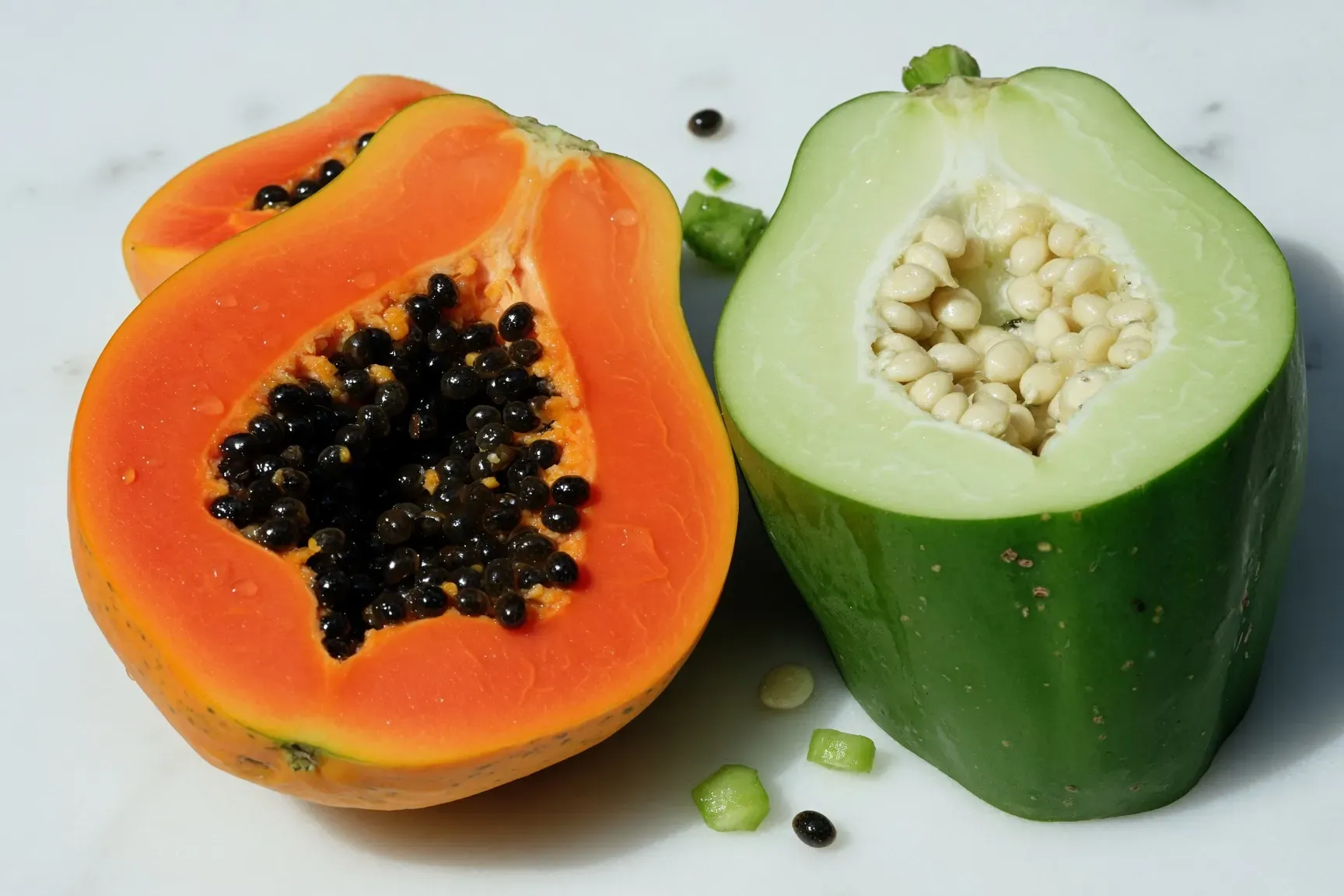
If there is one food question that comes up more consistently in South Asian pregnancy conversations than almost any other, it is this one: is papaya safe during pregnancy?
Ask ten people and you may get ten different answers. Your mother says absolutely not. A friend says she ate it throughout her pregnancy without any issues. The internet gives you alarming articles alongside reassuring ones. Your doctor gives a more measured response that may not fully settle the question for you.
The confusion is understandable, because the answer is actually more nuanced than either “yes, completely safe” or “no, avoid it entirely.” The safety of papaya in pregnancy depends on what form of papaya you’re eating — and this distinction, once you understand it, resolves the confusion fairly completely.
The actual concern: latex and papain in unripe papaya
The concern about papaya in pregnancy is not about ripe papaya. It is specifically about unripe and semi-ripe papaya, and the biologically active substances it contains.
Unripe papaya — the green, hard fruit used in raw papaya salads, in certain chutneys, and in some South Indian preparations — contains high concentrations of latex and an enzyme called papain.
Papain is a proteolytic enzyme — meaning it breaks down proteins. In large concentrations, papain has been shown in animal studies to have uterotonic effects, meaning it can stimulate uterine contractions. This is the basis of the concern.
Papaya latex (the white sap found in unripe papaya) contains concentrated amounts of papain and other active compounds. It is also a known allergen.
The traditional practice of using unripe papaya as an abortifacient — to bring on menstruation or end an early pregnancy — exists across multiple cultures, and while the evidence is not robust enough to draw definitive clinical conclusions, it reflects a long-standing and probably accurate observation about the properties of unripe papaya in large medicinal amounts.
The important distinction: ripe papaya is different
Ripe papaya — the orange, sweet, soft fruit — has a fundamentally different biochemical profile from unripe papaya.
As papaya ripens, the concentration of papain and latex drops significantly. By the time the fruit is fully ripe — orange-fleshed, soft, and sweet — the active compounds that cause concern in the unripe form are present in very small amounts that are not considered clinically meaningful.
Ripe papaya is also nutritionally excellent:
- High in vitamin C — one of the best fruit sources available
- Good source of folate — important particularly in the first trimester
- Provides vitamin A (as beta-carotene), potassium, and magnesium
- High in fibre, which supports the bowel regularity that pregnancy hormones tend to undermine
- Contains digestive enzymes that can ease the bloating and digestive discomfort common in pregnancy
The World Health Organization and most mainstream nutritional guidelines do not advise against ripe papaya in pregnancy. The concern in the medical literature is directed specifically at unripe papaya and papaya latex, not at the ripe fruit.
Semi-ripe papaya: the grey area
There is a middle ground that deserves acknowledgement: partially ripe papaya, which has orange flesh in places but is still firm and has some unripe sections. In this form, the transition from unripe to ripe is incomplete, and the papain concentration is somewhere between the two extremes.
For practical purposes, if you’re uncertain about how ripe a papaya is, the conservative approach is to wait until it is fully soft and orange throughout. Eating clearly unripe or semi-ripe papaya during pregnancy is what the evidence cautions against. Eating fully ripe papaya is a different matter.
The first trimester specifically
Some providers advise avoiding papaya entirely in the first trimester as an extra precaution, particularly in the early weeks when the pregnancy is most vulnerable and any uterine stimulant carries more risk. If your provider has given this advice, it is not unreasonable.
If you are in the first trimester and have eaten a small amount of ripe papaya without any consequence, there is no cause for alarm — the risk from ripe papaya is not at the level of causing immediate harm. The caution around unripe papaya is more clinically significant.
What this means practically in a Kerala kitchen
Kerala uses papaya in a few distinct ways:
Raw papaya preparations — green papaya pickle, raw papaya salad, certain chutneys, and raw papaya as a cooked vegetable (curried or stir-fried). These preparations use unripe or semi-ripe papaya and should be avoided or significantly limited during pregnancy, particularly in the first trimester.
Ripe papaya as fruit — eaten fresh, in fruit salads, or as a simple snack. This is safe and nutritionally beneficial. One to two cups of ripe papaya a few times a week is a reasonable inclusion in a pregnancy diet.
Papaya in cooked form — ripe papaya is occasionally used in cooked preparations (some Indian fruit-based dishes or desserts). Cooking further reduces the activity of the enzymes involved. Cooked ripe papaya poses no specific concern.
Papaya seeds and papaya leaf extract
Papaya seeds and papaya leaf extract are concentrated sources of the active compounds in papaya and are not recommended during pregnancy. These are not typically eaten as regular food — they appear more often in the context of folk remedies or natural medicine — but they are worth specifically avoiding.
Papaya leaf tea, which is sometimes promoted as a remedy for dengue or other conditions, should not be used in pregnancy without medical guidance.
A note on the cultural context
The strong prohibition on papaya in pregnancy that exists across South Asian cultures does not always distinguish between ripe and unripe papaya — it is often a blanket “avoid papaya.” This is worth understanding as protective folk wisdom that errs on the side of caution rather than as evidence that all papaya poses equal risk.
If your family or community has a strong cultural norm around avoiding papaya in pregnancy entirely, following that norm is not harmful — you are not missing something irreplaceable, since the nutrients in ripe papaya are available from many other fruits. The purpose of this article is not to persuade you to eat papaya. It is to explain why the concern exists, where it is most relevant (unripe papaya), and where it is less applicable (fully ripe papaya), so that you can make an informed decision.
The clear summary
- Unripe and semi-ripe papaya — avoid during pregnancy, particularly in the first trimester
- Papaya seeds and papaya leaf extract — avoid during pregnancy
- Fully ripe papaya — considered safe in moderate amounts; nutritionally beneficial
- If uncertain about ripeness — wait until the fruit is completely soft and orange throughout
- If you have had any pregnancy complications or have been specifically advised to avoid papaya by your provider — follow your provider’s guidance
This is one of the more frequently asked pregnancy food questions, and it deserves a clearer answer than the internet usually provides. The concern is real, but it is specific. Understanding what it applies to allows you to make a sensible decision rather than either dismissing the concern entirely or avoiding a nutritious fruit unnecessarily.
This article is for general educational purposes only and does not replace personalised nutrition or medical advice. Always consult your doctor, midwife, or a qualified healthcare professional about your specific dietary needs during pregnancy.