Valaikappu and Baby Shower Traditions in Kerala: The Meaning Behind the Rituals
A warm guide to Valaikappu, the Kerala baby shower ceremony — its origins, rituals, regional variations, and what the traditions mean for expecting mothers and their families.
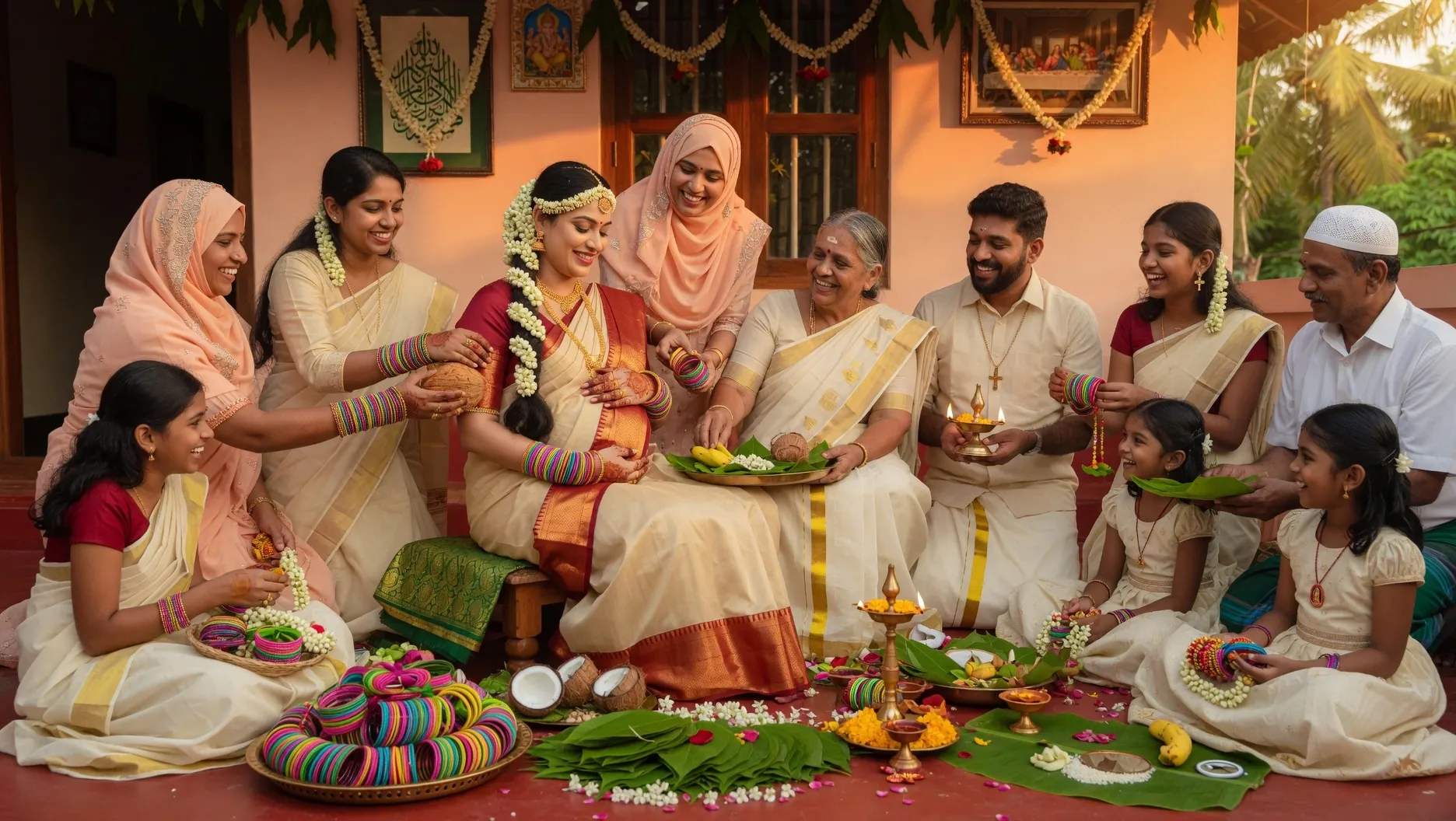
There is a moment in many Kerala pregnancies — usually somewhere in the seventh month — when the family stops treating the pregnancy as something quietly private and begins to celebrate it openly. The bump is visible. The baby is moving. The due date is close enough to feel real. And the women in the family gather to mark it.
That gathering is Valaikappu. And for many Kerala families, it is one of the most meaningful moments of the entire pregnancy.
What Valaikappu is
Valaikappu — the word comes from Tamil and Malayalam roots meaning “bangle ceremony” or “protective ceremony” — is a traditional South Indian pregnancy ritual performed during the seventh month of pregnancy, though some families observe it in the fifth or ninth month depending on regional custom and family tradition.
At its core, Valaikappu is a ceremony of protection and blessing. The pregnant woman is adorned with glass bangles — traditionally green, though red and gold are also common — by the elder women of the family. The bangles are believed to ward off negative energies and protect both mother and child. Their sound, the light tinkling as the mother moves, is thought to be soothing to the baby in the womb.
Beyond the bangles, Valaikappu typically includes:
- A ritual bath or ceremonial preparation of the mother
- Application of turmeric and other auspicious substances
- Prayers or temple offerings depending on family custom
- A gathering of women — maternal aunts, grandmothers, neighbours — who offer blessings
- A feast, because no significant occasion in Kerala passes without one
- Songs — traditional pregnancy songs sung by older women, many of which have been passed down orally for generations
The meaning underneath the ritual
Valaikappu is not simply a party. It is a formal acknowledgement by the community that a new life is coming, and that the woman carrying that life deserves to be surrounded, supported, and seen.
There is a psychological dimension to this that modern research on pregnancy wellbeing has only recently begun to articulate. The transition to motherhood — particularly for a first-time mother — can be isolating. The early months of pregnancy are often kept quiet. The physical experience is largely private. Valaikappu marks the point at which that privacy gives way to community — when the family says, out loud and in celebration, we know what you are carrying and we are here.
For many Kerala women, the memory of their Valaikappu stays with them long after the pregnancy is over. Not because of the bangles or the food, but because of that feeling of being gathered around.
Regional variations across Kerala
Valaikappu looks different depending on where in Kerala the family is from, what community they belong to, and how traditional or modern their practice is.
In some Hindu families, Valaikappu is closely connected to temple rituals — the ceremony may begin with offerings to the family deity and include specific prayers for safe delivery and a healthy child. In other families, it is primarily a domestic celebration with the religious elements kept simple.
Christian families in Kerala often observe a similar ceremony called Seemantham Feast or simply a baby shower — the gathering and blessing structure is similar even when the specific religious content differs. Muslim families in Kerala may observe related customs during pregnancy, though the form varies considerably between communities.
The common thread across variations is the gathering of women around the expectant mother. Whatever form the ritual takes, that element remains.
How Valaikappu has changed
In urban Kerala and among Malayali families living outside Kerala — in the Gulf, in other Indian cities, in the diaspora — Valaikappu has blended with the Western baby shower in interesting ways. The ceremony might now include games, gift registries, themed decorations, and cake alongside the traditional rituals. Some families choose between one or the other. Many do both — a traditional Valaikappu ceremony at home or the temple, followed by a more contemporary celebration with friends.
Neither is more correct than the other. Traditions evolve because families evolve, and the meaning of the ritual — the gathering, the blessing, the acknowledgement — survives the changes in its form.
What expecting mothers say
What women consistently describe about Valaikappu is not the ritual itself but the feeling it produces. The sensation of being surrounded by women who have all been pregnant, who have all navigated what you are navigating, who are offering their presence and their blessing because they know from experience what this moment means.
That kind of intergenerational support is not something an app or an article can replicate. But it is worth naming, and worth seeking, and worth accepting when it is offered.
A note for families navigating different traditions
Not every Kerala family observes Valaikappu. Not every expecting mother in Kerala is Hindu. Not every family has the intergenerational presence that traditional ceremonies assume — grandmothers may be far away, family may be small, circumstances may not allow a gathering.
If Valaikappu is part of your tradition, receive it. If it isn’t, the meaning behind it — community, blessing, acknowledgement — can be expressed in other forms. The point was never the bangles. The point was the gathering.
This article is for cultural and educational purposes. Pregnancy ritual practices vary widely between families and communities. Always prioritise your health and your doctor’s guidance during pregnancy.