Hospital Bag Checklist for Indian Hospitals: What to Pack, What Not to Bother With
A practical, India-specific hospital bag checklist — what you actually need for a vaginal birth and C-section, what Indian hospitals typically provide, and what to leave at home.
Most hospital bag checklists are written for Western hospital contexts, where private rooms are standard, partners typically stay overnight, and specific items (like your own towels and toiletries) are necessary because the hospital does not provide them. Indian hospitals — whether government or private — operate differently, and a checklist that hasn’t been adapted to that context will have you arriving with things you don’t need and missing things you do.
This guide is specifically for Indian hospital births, reflecting the reality of what is provided, what varies, and what actually matters.
Pack your bag by 36 weeks
Labour can begin before the due date, and having a ready bag from 36 weeks means you are not packing in early labour or sending someone else to figure out what you need.
For the mother — labour and delivery
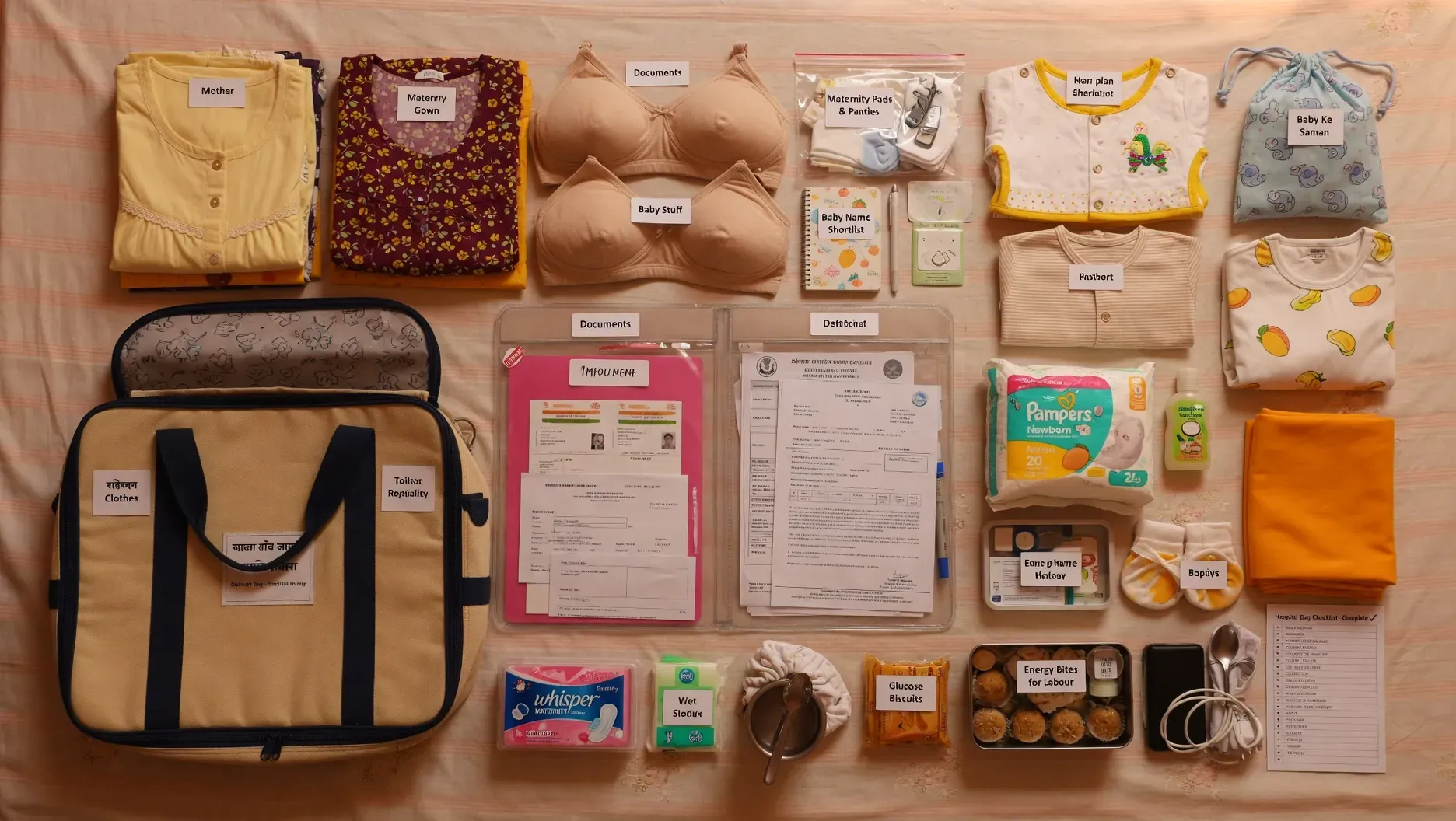
Documents (in a folder or zip pouch):
- Antenatal records and previous ultrasound reports
- Blood group and blood test results
- Hospital registration card / maternity file
- Insurance card or cashless authorisation if applicable
- Photo ID
- Emergency contact numbers written down (phone batteries die)
Comfort during labour:
- Comfortable loose clothing to labour in — a long cotton kurta or nightgown works well; you will not necessarily stay in a hospital gown
- Slippers or flip-flops for walking the ward
- Hair ties or clips
- A small towel if you want to use the shower during labour
- Lip balm — breathing exercises dry the lips significantly
- A water bottle
- Light snacks for early labour — nuts, dry biscuits, fruit — for you and your support person
For pushing and birth:
- You will typically be in hospital-provided gown or draping for delivery itself — your own clothing is not necessary for this part
For the mother — postpartum stay
Clothing:
- 3–4 front-opening or loose nightgowns or kurtis — front-opening for breastfeeding access
- 1–2 sets of loose daywear for if you have visitors
- Comfortable slippers that can be slipped on without bending
- Warm shawl or light blanket — hospital wards can be cold with air conditioning, particularly at night
Postpartum hygiene:
- Maternity pads — thick, overnight-length sanitary pads for postpartum bleeding. Government hospitals may or may not provide these; private hospitals often do. Bring your own supply regardless. You will need them.
- Comfortable underwear — disposable postpartum underwear or old large cotton underwear that you don’t mind staining
- Breast pads for when milk comes in on day 3–5
- A nursing bra or soft bralette for breastfeeding support
- Your regular toiletries — most Indian hospitals do not provide toiletries
- Small towel for personal use if not provided
- Wet wipes — useful for freshening up when showering is not immediately possible after C-section
Comfort and recovery:
- Your own pillow if you have strong preferences about pillow quality (optional but appreciated by many)
- Phone charger and power bank
- Earphones
- Books, downloaded content, or whatever you find genuinely restful — the postpartum hospital stay involves a lot of waiting and middle-of-the-night quiet
Breastfeeding:
- Nipple cream (lanolin or equivalent) — your nipples will need it
- Nursing pillow if you found one helpful in practice — these are large and may not be worth the bag space; the hospital may have alternatives
For the baby
Clothing:
- 4–6 soft cotton onesies or jhablas in newborn size
- 2–3 lightweight cotton blankets for wrapping
- A going-home outfit (which can be one of the above)
- Soft cotton cap for the baby’s head in the air-conditioned ward
- Socks
Note: Many private hospitals provide baby clothing and blankets. Government hospitals may not. Packing your own ensures you are not dependent on what is provided.
Nappies:
- A pack of newborn disposables for the hospital stay — most Indian hospitals do not provide nappies
Skincare:
- Baby oil or coconut oil for post-bath massage — if this is something you want to do in hospital; the first bath is not usually given immediately
For the support person / partner
- A change of clothes (1–2 sets)
- Toiletries
- Phone charger
- Their own snacks — hospital canteens are not always open at all hours
- Cash for hospital meals, pharmacy, or incidentals
- A list of people to notify when the baby is born
What not to bother with
Expensive hospital gowns marketed for labour. A comfortable loose kurta or old nightgown serves the same purpose and costs nothing extra.
A birth playlist and aromatherapy diffuser. Not because these things are useless, but because the Indian hospital environment — with its open wards, multiple patients, staff flow, and institutional smells — makes a carefully curated sensory environment largely impractical. If music is genuinely important to you, earphones and a downloaded playlist are sufficient.
A TENS machine. Not widely used or available in India, and the labour ward environment makes setting one up difficult.
An excessive supply of anything perishable. Pack for 3–5 days and have someone bring additional supplies if needed. Overpacking creates clutter in a room that may be shared.
Valuables. Leave jewellery, expensive electronics, and large amounts of cash at home or with a trusted person. Hospital rooms are not secure storage.
This article is for general informational purposes. Hospital provisions vary significantly between facilities — ask your specific hospital what they provide before your admission to supplement this list with what you will need to bring.