Dreams During Pregnancy: Why They Get So Vivid and Strange
A gentle guide to vivid, intense pregnancy dreams — why they happen, what they mean, the most common dream themes, and when to pay attention to what your dreams might be telling you about your waking state.
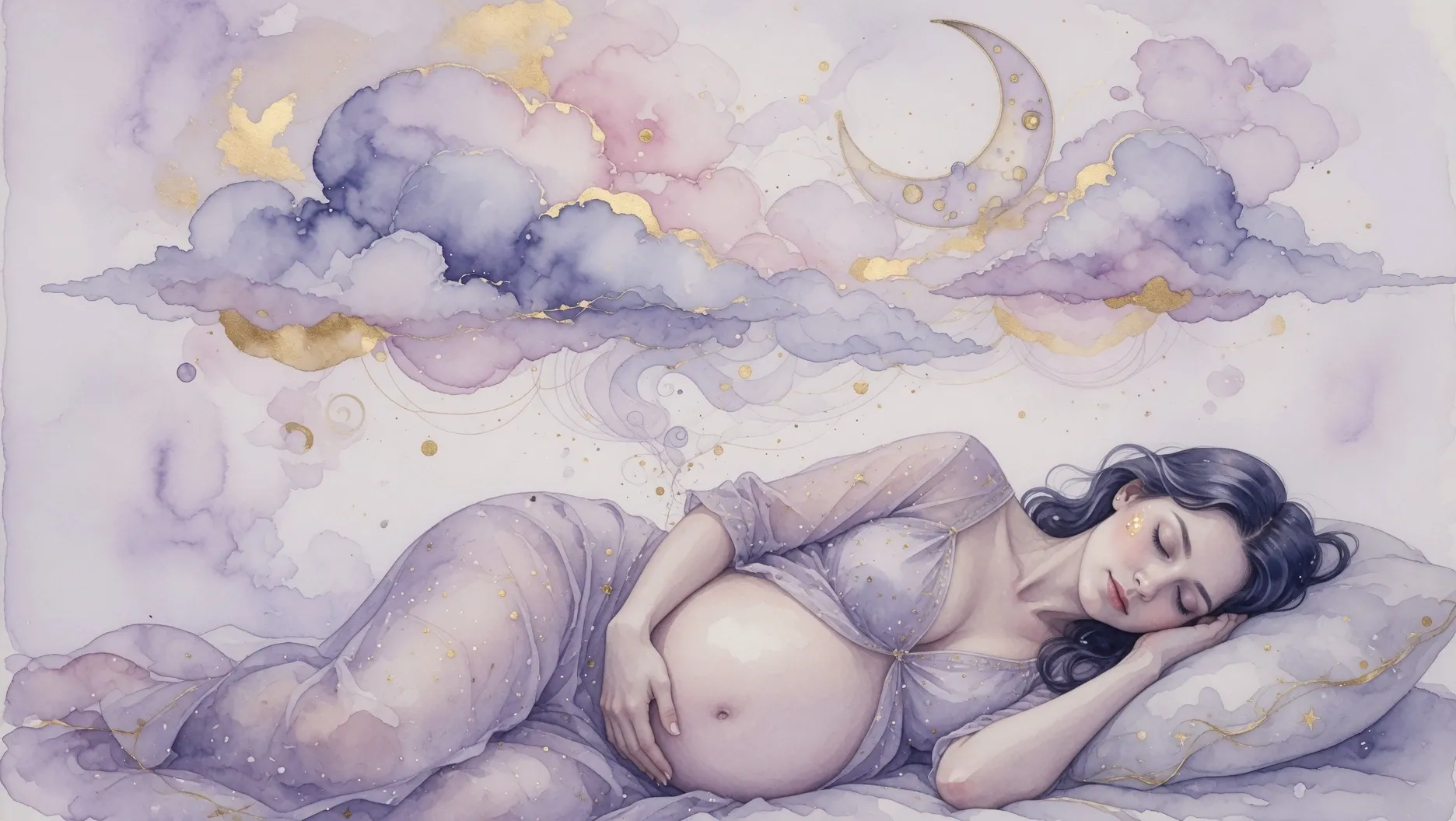
At some point in the second or third trimester, many pregnant women find themselves waking from dreams that are unlike anything they normally experience — vivid enough to feel real, emotionally intense in ways that linger into the day, sometimes disturbing, sometimes beautiful, frequently bizarre in ways that their pre-pregnancy dreams were not.
You dream about the baby — but the baby is sometimes a kitten, or a full-grown adult, or something unclear that you are responsible for but cannot quite see. You dream about things going wrong in ways that are visceral and frightening. You dream about people from your past who have no obvious reason to appear. You wake up feeling something — fear, joy, grief, confusion — that takes time to shake off.
This is common. It is normal. And there are specific reasons it happens in pregnancy.
Why pregnancy dreams are more vivid
Sleep architecture changes. During pregnancy, particularly as the pregnancy progresses, the proportion of sleep spent in REM (rapid eye movement) sleep — the stage in which the most vivid, narrative-rich dreaming occurs — increases, and waking during or immediately after REM periods becomes more frequent. More frequent awakening from REM sleep means more dream recall. More time in REM sleep means more dreaming. The dreams aren’t necessarily more intense in their underlying neurology — they are simply remembered more fully because you are waking from them more often.
Hormonal effects. Progesterone and oestrogen influence the brain in multiple ways, including effects on the emotional intensity of dreams. The same hormonal shift that intensifies emotional responses in waking life — the way pregnancy heightens sensitivity, brings unexpected weeping, makes things feel more significant — operates similarly in dream states.
Emotional processing. Dreams serve, among other functions, a role in emotional processing — working through experiences, fears, and feelings in a less constrained state than waking consciousness allows. Pregnancy brings a volume of new emotion — excitement, fear, ambivalence, anticipatory grief for your pre-baby life, love for an unknown person, anxiety about what you cannot control — that is beyond what waking processing alone can manage. Dreams become a mechanism for that overflow.
Physical sensations entering dreams. The physical experiences of pregnancy — a full bladder pressing insistently, the baby moving, heartburn, the restriction of finding a comfortable position — can be incorporated into dream narratives in distorted and sometimes alarming ways. A feeling of constriction or pressure can become a dream of being trapped. The baby’s movement can become a dream about something alive and unknowable.
Common pregnancy dream themes
Research on pregnancy dreams has consistently identified several recurring themes — not universal, but common enough to be worth naming.
Pregnancy and birth dreams. Dreams about the baby, about giving birth — often in situations that are strange or wrong, in unusual places, with unexpected complications, or with babies that are not quite human — are among the most common. These dreams reflect the enormous focus pregnancy places on the birth event and the baby, and the brain’s limited ability to imagine something it has not yet experienced.
Dreams about the baby’s gender or appearance. Many women dream about what their baby looks like before the birth. These dreams are not premonitions — they are the brain attempting to complete an unknown picture.
Water dreams. Dreams involving water — swimming, flooding, oceans, rivers — are significantly more common during pregnancy across cultures. Water is associated symbolically and neurologically with emotion, the unconscious, and new life, and the amniotic context of pregnancy may reinforce this connection.
Losing or forgetting the baby. Dreams in which you lose track of the baby, forget the baby, or are unable to care for them are extremely common and frequently distressing. They are almost universally an expression of anxiety — fear of inadequacy, fear of something going wrong — rather than a prediction or a reflection of actual maternal feelings. Waking up frightened from this kind of dream is extremely common and does not mean anything about what kind of mother you will be.
Death and loss. Dreams about dying, about loved ones dying, or about loss more generally are more frequent during pregnancy. Psychologically, this reflects the genuine transition that pregnancy represents — parts of previous identity are genuinely ending — and the brain’s need to process mortality and change.
Sexual dreams. Pregnancy increases blood flow to the pelvic region, and some women find that sexual dreams are more frequent or vivid during pregnancy. This is physiological and normal.
What to do with disturbing dreams
The most distressing pregnancy dreams — dreams about something happening to the baby, about failing as a mother, about the birth going terribly wrong — can leave a residue of fear and sadness that persists into the day.
Some things that help:
Name it. Telling your partner or a trusted person what you dreamed, and recognising it as a dream rather than carrying it as if it were real information, helps the emotional residue dissipate more quickly.
Understand it as processing, not prediction. Pregnancy anxiety takes dream form. The content of the dream reflects your fears, not the future.
Write it down if the feelings are persistent. Pregnancy journaling — including dreams — is a way of externalising the emotional content rather than carrying it internally.
Pay attention if the anxiety underlying the dreams is significant. If the themes of your dreams — loss, failure, abandonment, something going catastrophically wrong — are things you find yourself thinking about frequently while awake, and if they are causing distress that is interfering with your daily functioning, that anxiety is worth discussing with your doctor or a counsellor. The dreams are a signal of what is present underneath, and what is present underneath deserves attention.
This article is for general educational and informational purposes only. If you are experiencing significant anxiety during pregnancy, please speak with your doctor or a qualified mental health professional.