Iron-Rich Indian Foods for Pregnancy: A Complete Guide for Every Trimester
Discover the best iron-rich Indian foods for pregnancy, how to improve absorption, and simple meal ideas for every trimester.
Iron is one of those nutrients that comes up in almost every antenatal appointment — and for good reason.
During pregnancy, your body is doing something remarkable: it’s producing significantly more blood than it normally would, to supply oxygen to your growing baby through the placenta. That process requires iron. Without enough of it, your blood can’t carry oxygen efficiently, and the result is anaemia — the kind of deep, persistent tiredness that feels different from ordinary pregnancy fatigue, alongside breathlessness, dizziness, and a general sense of running on empty.
Iron deficiency anaemia is one of the most common nutritional problems in pregnancy worldwide, and it is especially prevalent in South Asia. If you’ve been told your iron levels are low, or if your provider has recommended paying more attention to your iron intake, you’re not alone — and you’re in a better position than you might think, because the Indian kitchen is genuinely one of the richest sources of dietary iron available.
This guide is about making that work for you. Not through complicated supplements or unfamiliar superfoods, but through the lentils, greens, seeds, and grains that are probably already in your home.
Why iron matters more in pregnancy — and when it matters most
Your iron requirements roughly double during pregnancy. The body is remarkably good at increasing iron absorption from food when it senses the need — but this adaptation has limits, and the diet needs to provide enough raw material for it to work with.
Iron is most critical during the second and third trimesters, when your blood volume is expanding most rapidly and your baby is building their own iron stores for the first few months of life after birth. But deficiency in the first trimester can compound over time, which is why your provider may monitor iron levels throughout pregnancy rather than only at the end.
Low iron during pregnancy is linked to increased fatigue, reduced immunity, a higher risk of preterm birth, and lower birth weight. It also affects postpartum recovery — women who begin labour with low iron stores tend to recover more slowly after birth, and are at greater risk if there is any blood loss during delivery.
The good news is that dietary iron, alongside supplementation where recommended by your provider, makes a real difference. And in an Indian kitchen, the sources are both familiar and accessible.
The two types of iron — and why the distinction matters
Not all dietary iron is the same, and understanding the difference helps you eat smarter rather than just eating more.
Haem iron comes from animal sources — red meat, poultry, and fish. It is absorbed more efficiently by the body, with absorption rates of around fifteen to thirty-five percent.
Non-haem iron comes from plant sources — lentils, legumes, leafy greens, seeds, and fortified foods. It is absorbed less readily, at around two to twenty percent, but it is also the type of iron found in the majority of foods eaten in a traditional Indian vegetarian diet.
The lower absorption rate of non-haem iron doesn’t mean it’s ineffective — it means the way you eat it matters. Pairing non-haem iron sources with vitamin C significantly improves absorption. Avoiding tea and coffee immediately around meals reduces the inhibitory effect of tannins. Including small amounts of animal protein (even when the main dish is vegetarian) can also enhance non-haem iron uptake.
For vegetarian and vegan women, this context is important: your iron sources are plentiful, but the goal is to eat them thoughtfully.
The best iron-rich Indian foods for pregnancy
Lentils and legumes
This is where the Indian diet genuinely excels. Dal is eaten daily across most households, and it is one of the most iron-rich foods available in a plant-based diet.
- Masoor dal (red lentils) — quick to cook, easy to digest, particularly good in early pregnancy when digestion is sensitive
- Chana dal and whole chickpeas — higher in iron, excellent as curries or in rice dishes
- Rajma (kidney beans) — substantial iron content, filling, and versatile
- Moong dal — lighter on the stomach, good during nausea or digestive discomfort
- Urad dal — used in idli, dosa, and vada; a useful source when eaten regularly
- Black-eyed peas (lobiya) — underused but genuinely iron-rich, easy to prepare as a dry curry or stew
Eating dal at least once daily — ideally twice — is one of the most effective dietary strategies for maintaining iron levels across pregnancy.
Leafy greens
Spinach gets most of the attention, but the full range of leafy greens available in a Kerala or South Indian kitchen is worth knowing:
- Spinach (palak) — well-known, widely available, high in iron; squeeze lemon juice over cooked spinach to boost absorption
- Drumstick leaves (murungai keerai) — one of the most iron-dense greens available, used in sambar or as a dry stir-fry
- Amaranth (cheera / thotakura) — deeply iron-rich, commonly eaten in Kerala homes, underappreciated nutritionally
- Methi (fenugreek leaves) — good iron content; use in moderation in early pregnancy as large amounts may have uterine-stimulating effects; fine in culinary amounts through the second and third trimesters
- Kale and moringa — increasingly available, high in iron and complementary nutrients
A thoran, a stir-fry, a curry, or a soup — any preparation works. The important thing is frequency.
Seeds and nuts
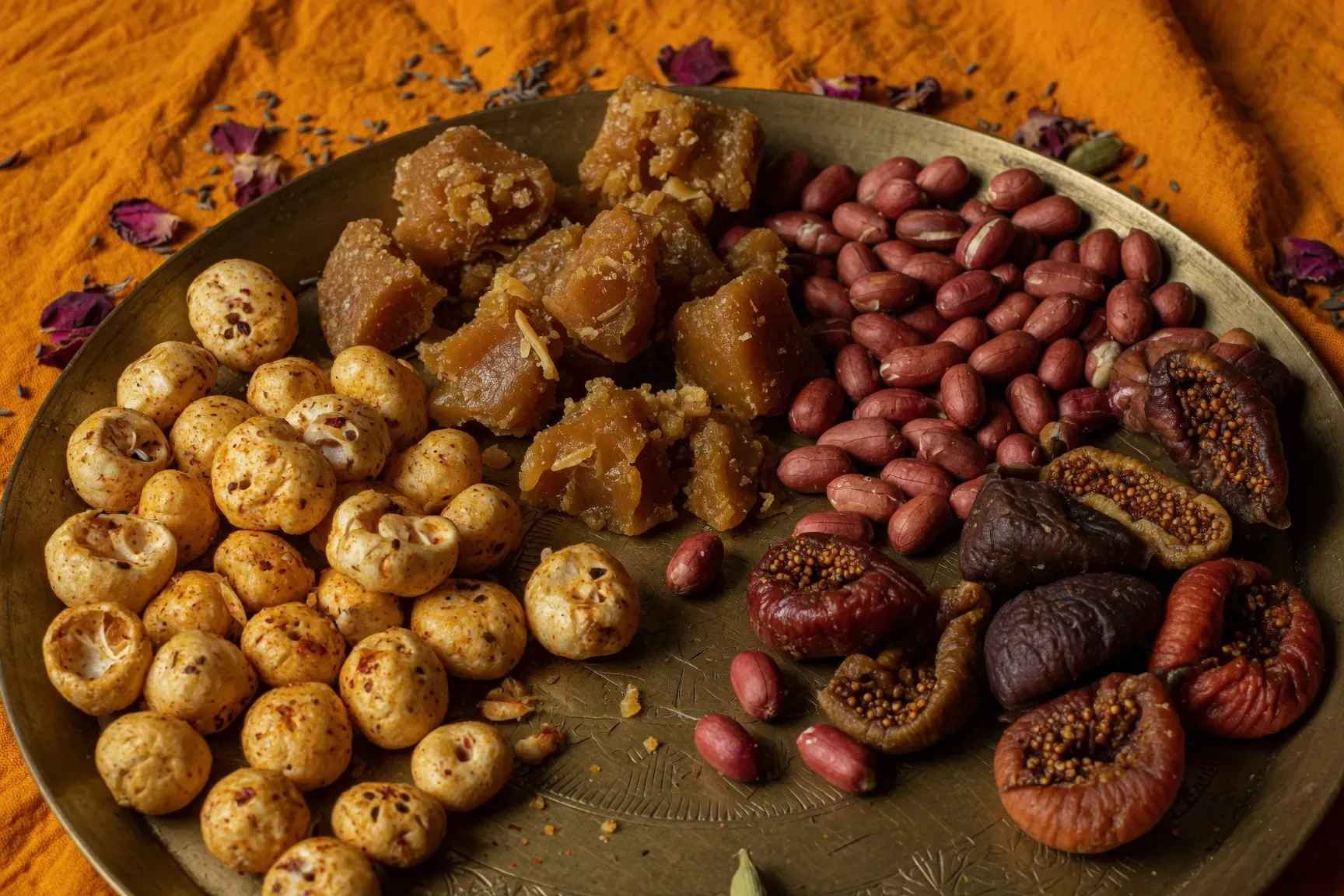
- Sesame seeds (til / ellu) — remarkable iron content for such a small seed; used in chutneys, laddoos, rice dishes
- Pumpkin seeds — one of the highest plant sources of iron; easy to eat as a snack or sprinkled over food
- Flaxseeds — useful for both iron and omega-3s; grind before eating for better absorption
- Cashews and almonds — moderate iron content, useful as snacks throughout the day
Whole grains
- Ragi (finger millet) — exceptional among grains for iron content; deserves its own discussion, which is covered elsewhere in this guide
- Whole wheat and fortified atta — switching from refined flour to whole wheat adds a useful amount of iron
- Brown rice — modestly higher in iron than white rice; practically interchangeable in most cooking
- Oats — good iron content per serving, easy in the first trimester when simple foods are better tolerated
Animal sources (for non-vegetarians)
- Chicken liver and beef liver — the highest dietary sources of iron available; effective in small amounts
- Red meat (in moderation) — mutton and beef provide haem iron efficiently; the guidance is to include it in moderate amounts rather than daily
- Fish — lower in iron than red meat but contributes meaningfully when eaten regularly; rohu, pomfret, and sardines are all useful
- Eggs — moderate iron; the yolk is where the iron is concentrated
How to increase iron absorption: the practical version
Eating iron-rich foods is only part of the equation. How you eat them matters almost as much.
Pair iron with vitamin C. This is the single most effective dietary strategy for improving non-haem iron absorption. It doesn’t require planning — just practical pairing:
- Squeeze lemon over dal or cooked greens
- Eat a small piece of citrus fruit after a lentil-based meal
- Add tomatoes to iron-rich curries (they provide both vitamin C and a flavour base)
- Have a small glass of orange juice or amla juice alongside a meal
- Use raw onion or fresh coriander as a garnish — both contain vitamin C
Separate tea and coffee from meals. Tannins in tea and coffee bind to iron and significantly reduce absorption. If you drink chai regularly, try to have it at least an hour before or after your main meals rather than alongside or immediately after them. This one change can make a meaningful difference to how much iron your body actually absorbs.
Cook in iron vessels. Traditional cast iron kadais and tawas do transfer a small but measurable amount of iron into food, particularly when cooking acidic foods like tomato-based curries or tamarind dishes. This is a genuine benefit of traditional cookware, not just sentiment.
Calcium competes with iron. Calcium and iron share absorption pathways, so eating very calcium-heavy foods alongside iron-rich foods slightly reduces uptake of both. This doesn’t mean avoiding them together — for practical purposes, just avoid taking a calcium supplement at exactly the same time as an iron supplement.
Soaking and sprouting legumes reduces phytates — compounds that can inhibit iron absorption. Many traditional preparation methods (soaking dal before cooking, using soaked and sprouted grains) already do this.
What to eat in each trimester
First trimester
Iron is important from the start, but the first trimester challenge is that nausea often makes iron-rich foods — particularly red meat and heavily spiced dishes — feel unappealing or impossible.
Work with what your body tolerates:
- Moong dal and plain rice is gentle and iron-contributing
- Lightly spiced lentil soup or rasam
- Oatmeal with a few nuts stirred in
- Banana with a small handful of sesame-based chikki or ladoo if sweet is tolerable
- Yogurt with soaked nuts — easy to eat even on difficult days
If your prenatal supplement includes iron, taking it as directed helps carry you through the days when food is harder.
Second trimester
This is the trimester to build a consistent iron routine. Appetite has usually returned, food feels manageable again, and the second trimester is when your blood volume is increasing most significantly.
Aim for:
- Iron-rich food at least twice daily — a dal or legume dish and a leafy green, ideally
- Consistent vitamin C pairing at meals
- Regular lemon juice on food as a simple habit
- A weekly inclusion of iron-dense food like sesame-based preparations, pumpkin seeds, or liver (if you eat meat)
Third trimester
Iron needs remain high in the third trimester, and your baby is also building their own iron stores during this period. The challenge here is comfort — smaller stomach capacity, heartburn, and digestive slowness can all affect appetite.
Practical approaches:
- Smaller, more frequent meals rather than large ones — which may mean iron-rich foods appear in snacks as well as main meals
- Simple preparations that are easy to eat — dal soup rather than a heavy curry, for instance
- Continuing the lemon-on-everything habit
- Taking your iron supplement as directed by your provider, particularly if blood tests have shown levels declining
A note on iron supplements in pregnancy
Your provider may recommend an iron supplement in addition to dietary changes, particularly if your haemoglobin levels are below the recommended range. This is common, and it is not a sign that your diet has failed — pregnancy iron needs are genuinely high, and many women need supplemental support regardless of how well they eat.
Iron supplements can cause constipation and, for some women, nausea. Taking them with food (rather than on an empty stomach) usually helps with nausea. For constipation, increasing fibre and fluid intake helps, and your provider can advise on alternatives if one formulation is difficult to tolerate.
Don’t take iron supplements beyond what your provider recommends. More is not better — excessive iron can cause its own problems, and the right dose is the one that gets your levels where they need to be.
What good iron nutrition looks like across a week
It doesn’t look like eating the same iron-dense meal every day. It looks like:
Dal at most meals. A leafy green thoran or stir-fry most days. Lemon as a regular habit. A handful of seeds or nuts as a snack. Chai moved away from mealtimes when possible. And a prenatal vitamin or iron supplement taken as your provider has advised.
That’s it. These aren’t complicated changes. They’re small adjustments to things you’re already doing — and together, they make a genuine difference to how your body manages one of the most demanding nutritional requirements of pregnancy.
This article is for general educational purposes only and does not replace personalised nutrition or medical advice. Always consult your doctor, midwife, or a qualified healthcare professional about your specific dietary needs during pregnancy.