
Coconut in Pregnancy: Benefits, Safe Amounts, and Common Questions
A clear guide to coconut, coconut water, coconut oil, and coconut milk during pregnancy — what the evidence says and what the Kerala kitchen already knows.
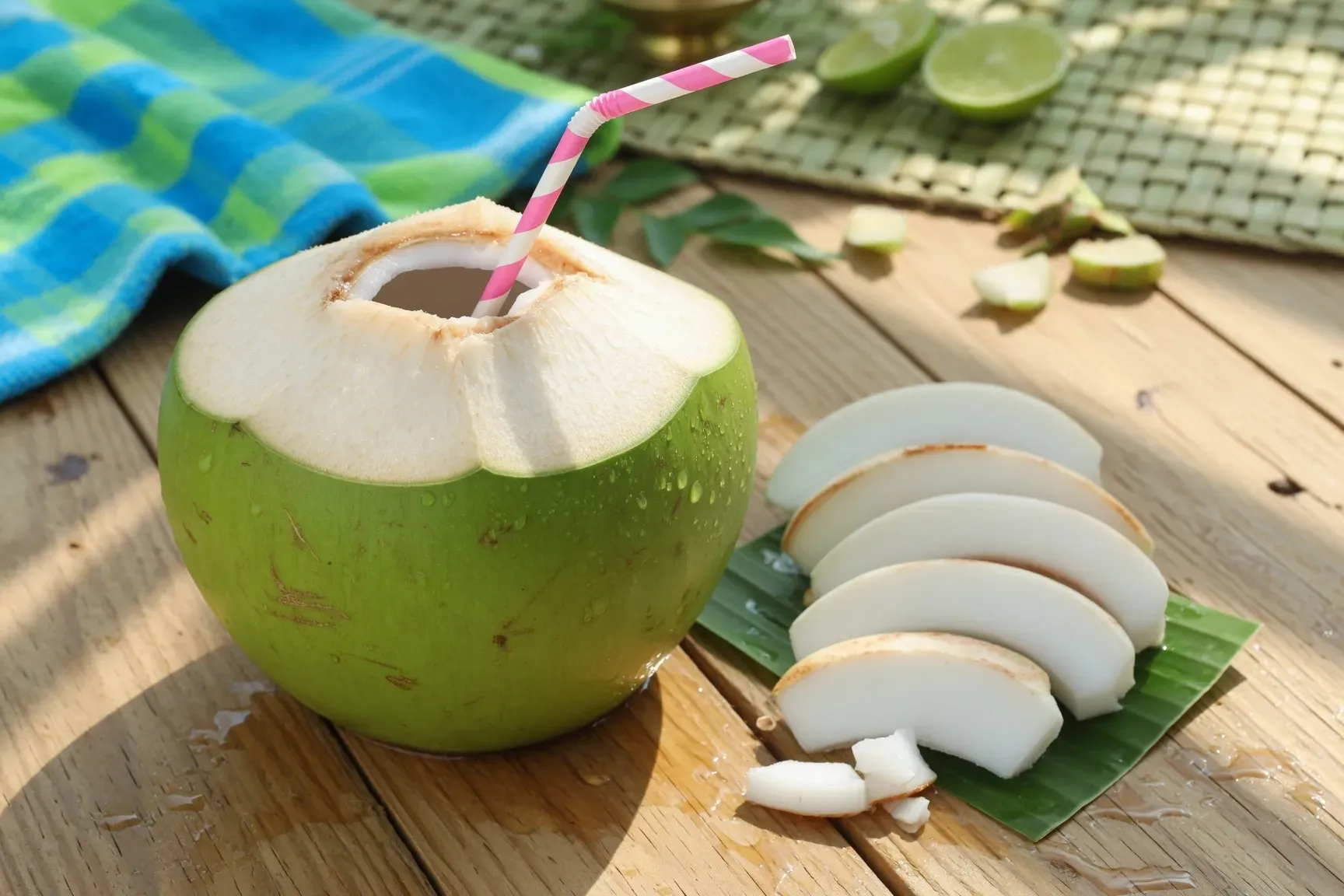
In Kerala, coconut is less an ingredient than a way of life.
It goes into the tempering, into the curries, into the chutneys, into the breakfasts, into the drinks. Coconut oil, coconut milk, grated coconut, tender coconut water — each form of this single fruit plays a different role in the kitchen and at the table. The coconut tree is sometimes called the kalpavriksha: the tree that provides everything.
Against this backdrop, the question of whether coconut is safe during pregnancy is almost poignant. Generations of Kerala women have eaten coconut throughout pregnancy without incident. And yet the internet has a way of casting doubt on even the most traditional foods, so here is a clear account of what is actually known.
Coconut water (tender coconut / ilaneer)
Coconut water is the form of coconut that generates the most specific questions in pregnancy — and the one with the most straightforward positive answer.
Tender coconut water is safe and genuinely beneficial during pregnancy. It is a natural electrolyte drink containing potassium, magnesium, sodium, and calcium in proportions that the body absorbs well. It supports hydration without the sugar load of commercial sports drinks or fruit juices. It is gentle on the digestive system and is often well tolerated even when other drinks cause discomfort.
Why it matters in pregnancy specifically:
- Hydration support — increased blood volume and the demands of pregnancy mean fluid needs are higher than usual. Coconut water is a pleasant, effective way to contribute to daily hydration, particularly in the hot and humid climate of Kerala where plain water can feel insufficient on difficult days.
- Electrolyte replacement — if nausea and vomiting are causing you to lose fluids, coconut water replaces electrolytes in a way that plain water alone doesn’t.
- Potassium — coconut water is notably high in potassium, which supports heart function and blood pressure regulation — both of which are under additional strain in pregnancy.
- Natural and minimally processed — fresh tender coconut water from the fruit itself is about as close to an unprocessed food as it’s possible to drink.
Is there a limit?
Fresh tender coconut water has a natural sugar content — lower than most fruit juices, but present. One or two tender coconuts per day is a very reasonable amount for most pregnant women. Women managing gestational diabetes should check with their provider about amounts, as the natural sugars in coconut water do affect blood glucose, though less dramatically than fruit juice.
The concern sometimes expressed about coconut water being “cooling” in the traditional Ayurvedic sense is worth acknowledging: in the Ayurvedic framework, coconut water is classified as cooling, and there is a traditional belief that it should be consumed in moderation particularly in early pregnancy or in cooler seasons. This is a traditional framework worth being aware of, and if your family or community follows this guidance, there is no harm in being conservative with amounts. Formally, though, there is no clinical evidence of harm from moderate coconut water consumption in pregnancy.
Packaged coconut water is less ideal than fresh — it often contains added sugars or preservatives, and the electrolyte content is lower after processing. Fresh is always preferable when available.
Coconut oil
Coconut oil has had an unusual journey in nutritional science — it was vilified for decades because of its high saturated fat content, then celebrated as a health food, then criticised again. The current evidence sits somewhere in the middle.
Coconut oil is high in saturated fat, and specifically in medium-chain triglycerides (MCTs) — a type of saturated fat that behaves differently metabolically from the long-chain saturated fats in animal products. MCTs are absorbed and used for energy more readily than other fats, and some research suggests they have neutral or even mildly beneficial effects on certain cardiovascular markers, though this is still an area of ongoing research.
In pregnancy, the honest position is:
Cooking with coconut oil in moderate amounts — as it is used across Kerala kitchens — is safe. The amounts used in a tadka, in a curry, or for roasting vegetables are not a concern. The Mediterranean diet’s emphasis on olive oil for heart health doesn’t mean coconut oil is harmful; it means that for women with pre-existing cardiovascular risk factors, there are other fat sources worth prioritising.
If you have been advised by your provider to limit saturated fat for specific medical reasons, discuss coconut oil specifically with them. For most pregnant women eating a typical Kerala diet, coconut oil as a cooking medium in normal culinary amounts is not something to worry about.
What is not recommended is consuming coconut oil in large supplemental amounts — several tablespoons daily — which some health influencers have promoted. There is no evidence that this benefits pregnancy, and the caloric load of large amounts of any added fat is not appropriate.
Coconut milk
Coconut milk — the thick, creamy liquid extracted from grated coconut — is safe during pregnancy and is a nutritionally useful ingredient in cooking. It provides medium-chain fats, a small amount of iron and potassium, and the fatty richness that makes South Indian curries and fish preparations deeply satisfying.
From a nutritional perspective, coconut milk is primarily a fat source rather than a protein or micronutrient source. In the context of a balanced meal — fish or chicken cooked in coconut milk with spices, for example — it contributes to satiety and flavour without posing any specific risk.
Coconut milk-based curries eaten regularly through pregnancy are entirely fine. The caution applies in the same place as with all high-fat foods: in very large amounts, very frequently, it adds significant calories and saturated fat. Normal South Indian cooking quantities are not a concern.
Grated coconut and coconut-based preparations
Freshly grated coconut in chutneys, thorans, and rice preparations is safe throughout pregnancy and contributes fibre, iron, and medium-chain fats in small amounts. The amounts used in typical South Indian cooking — a few tablespoons in a chutney, grated coconut stirred into a thoran — are nutritionally modest and completely appropriate.
Coconut-based sweets — coconut laddoo, coconut burfi, and preparations made with jaggery and grated coconut — are fine as occasional treats. The concern here is not the coconut but the sugar content in preparations that also contain significant added sweetener.
Dried coconut (copra)
Dried coconut has a higher fat density than fresh coconut because the water content has been removed, concentrating the oils. In small amounts — a few pieces as part of a preparation — it is fine. Very large daily consumption of dried coconut adds up to a significant saturated fat load, but this is not how it is typically used in home cooking.
Addressing common questions
“Is it true that eating coconut makes the baby’s hair grow?”
This is a widely held belief in Kerala and across South India. There is no scientific evidence for it. Hair development in a fetus is determined by genetics and normal fetal development, not by maternal coconut consumption. This is a piece of traditional folklore rather than a nutritional fact — but if eating coconut makes you feel good about your baby, there’s nothing wrong with coconut, so there’s no harm either.
“Will coconut oil applied externally during pregnancy cause any problems?”
Coconut oil used externally — on skin, on hair, on the belly for stretch mark prevention — is safe during pregnancy. It is a traditional practice across South India for good reason: it is a gentle, naturally moisturising oil that is well tolerated on sensitive pregnancy skin. There is no meaningful absorption of the saturated fats through skin, so the discussions about dietary saturated fat are irrelevant to topical use.
“Is coconut water better than plain water for pregnancy hydration?”
Not better — complementary. Plain water remains the primary hydration source and should be the majority of what you drink. Coconut water is a pleasant, electrolyte-containing addition that many women find refreshing and easy to drink, particularly when they struggle to consume enough plain water. It is an enhancement to hydration, not a replacement.
The honest summary
Coconut, in the forms it appears in Kerala cooking, is safe in pregnancy. Coconut water supports hydration and electrolyte balance. Coconut oil in culinary amounts is not a specific concern. Coconut milk in curries and cooking is fine. Fresh grated coconut in traditional preparations is unproblematic.
The Kerala kitchen has been built around this ingredient for generations, and Kerala pregnancies have unfolded within it without coconut being a source of harm. Cook the way you cook. Drink tender coconut on a warm day. Use coconut oil if that is what your kitchen uses. The evidence does not require you to change any of this.
This article is for general educational purposes only and does not replace personalised nutrition or medical advice. Always consult your doctor, midwife, or a qualified healthcare professional about your specific dietary needs during pregnancy.