
Swimming During Pregnancy: Why It Is One of the Best Options Available
A practical guide to swimming during pregnancy — why it is particularly well-suited to pregnant bodies, how to do it safely, and what to know about pools and open water in India.
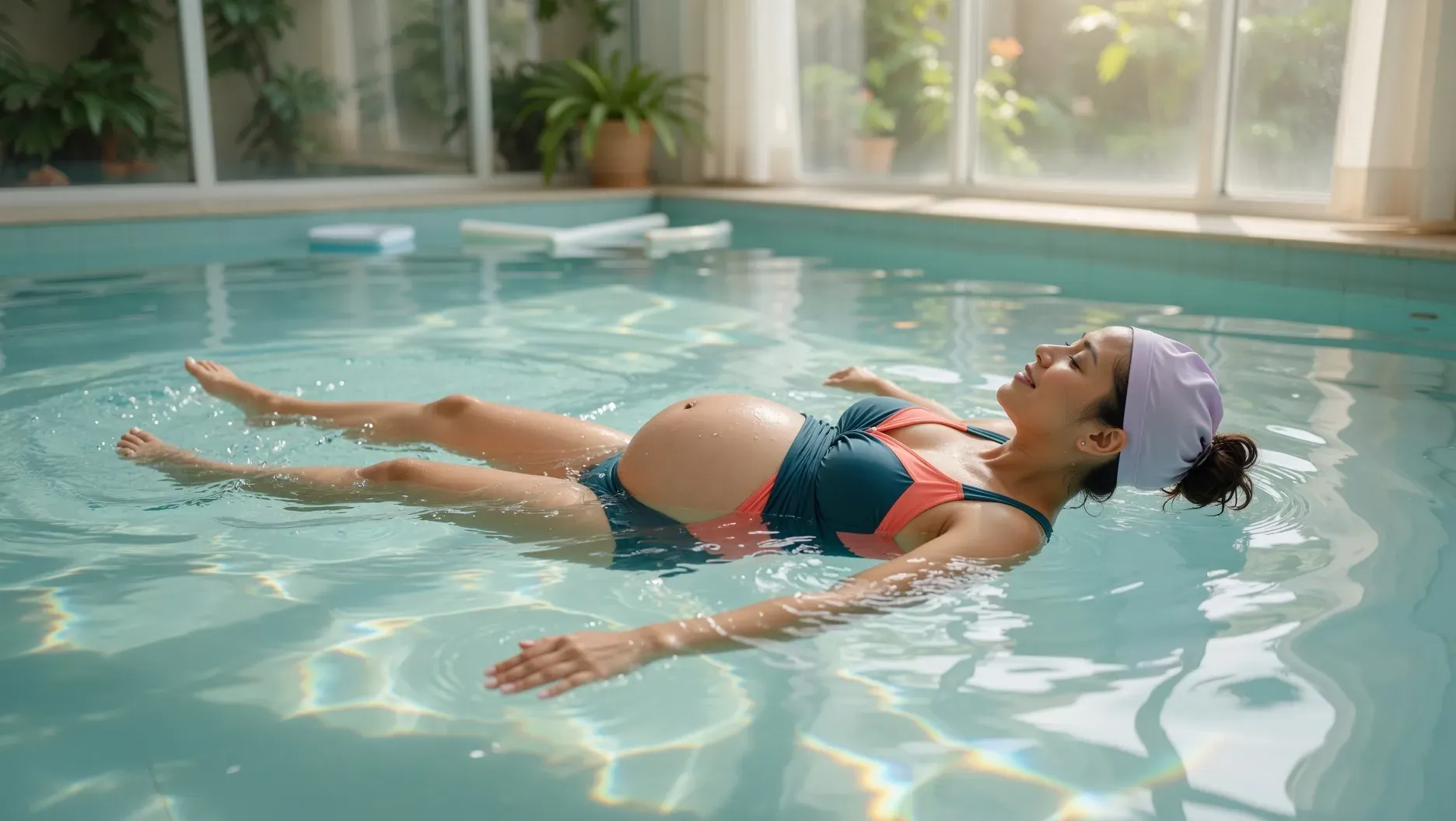
If there is one form of exercise that pregnancy physiology seems almost designed for, it is swimming. The properties of water that make it feel effortless — buoyancy, resistance, cooling — address some of the most significant physical challenges of pregnancy in ways that land-based exercise simply cannot.
This does not mean swimming is mandatory or that it is right for everyone. But for women who have access to a pool and who are able to swim, it deserves to be at the top of the list of pregnancy exercise options rather than an afterthought.
Why water is particularly suited to pregnant bodies
Buoyancy reduces the weight your joints carry. In water, you experience approximately 90% less body weight than on land. For a woman in her third trimester carrying the combined weight of the baby, placenta, amniotic fluid, and increased blood volume, this is not a small thing. Joints that are under constant load on land — hips, knees, ankles, the lumbar spine — are relieved in water in a way that allows movement that would be uncomfortable or impossible on land.
The resistance of water provides exercise without impact. Moving through water requires muscular effort against resistance — a full-body workout — without the jarring impact of running or other weight-bearing exercise. For a pelvic floor that is already under significant load during pregnancy, the absence of impact is meaningful.
Water cools the body. Overheating during pregnancy is a genuine concern — core body temperature runs slightly higher in pregnancy, and sustained elevated temperature in the first trimester has associations with neural tube development. Swimming in a pool maintains a cool body temperature throughout, unlike running or other exercise in Indian heat.
Swelling and fluid retention are reduced. The hydrostatic pressure of water — the gentle, even compression of water on the body — has a measurable effect on fluid redistribution, reducing the ankle and leg swelling that many pregnant women experience. Many women report that swollen feet and ankles feel immediately better during and after a swim.
Back pain is relieved. The same buoyancy that relieves joint load relieves the back pain that is nearly universal in the second and third trimesters. Floating on the back, moving through the water, takes the load off the structures that are most strained during pregnancy.
What swimming during pregnancy looks like
You do not need to swim laps at a competitive pace to benefit. Any movement through the water — slow breaststroke, backstroke, water walking, gentle kicks while holding the pool edge — provides cardiovascular benefit, muscular engagement, and the physical relief that pregnancy swimming offers.
The intensity that is appropriate during pregnancy is the same as for any pregnancy exercise: you should be able to hold a conversation while swimming. If you are breathless to the point of being unable to speak, ease back. The “talk test” remains the simplest guide to appropriate exertion.
Breaststroke is comfortable for most of the pregnancy. Front crawl with rotational breathing can be adapted. Backstroke is comfortable in the second trimester and may become uncomfortable as the bump grows and lies flat on the back becomes less advisable in the third trimester — float position on the back for brief periods is generally considered safe, but sustained back-lying for extended periods is not recommended in the third trimester.
Water walking — walking lengths of the pool in waist to chest-depth water — provides cardiovascular and resistance benefits for women who are less confident swimmers and is entirely appropriate during pregnancy.
Safety considerations for swimming in India
Pool hygiene. A chlorinated, well-maintained pool is safe during pregnancy. Chlorine does not pose a risk to the pregnancy. The concern is with pool water quality — a well-managed pool at a reputable facility is appropriate; avoid pools that are visibly cloudy, inadequately maintained, or of uncertain hygiene standard.
Temperature. Avoid hot pools, hot tubs, and heated pools above approximately 32°C. The concern about overheating applies to water temperature as well as air temperature.
Open water swimming. Swimming in rivers, lakes, or coastal water carries infection risks — from naturally occurring bacteria, from pollution, and from organisms that clean pools don’t contain. In the Indian context, open water swimming during pregnancy is generally not recommended due to the higher risk of waterborne infection.
Getting in and out safely. Wet pool surrounds are a slip risk, and the loosened ligaments of pregnancy make slipping more consequential. Use handrails and pool steps rather than jumping or diving in.
When to stop. Stop and get out of the water if you experience dizziness, unusual shortness of breath, chest pain, contractions, unusual pain, or any symptom that concerns you.
When to discuss swimming with your doctor
If your pregnancy has any complications — placenta previa, cervical incompetence, threatened preterm labour, or any condition where your doctor has recommended reduced activity — discuss whether swimming is appropriate before beginning. For uncomplicated pregnancies, swimming is generally considered safe and beneficial throughout all three trimesters.
This article is for general educational purposes only. If you have any pregnancy complications or concerns about exercise safety, consult your doctor or midwife before beginning or continuing a swimming routine.