Hydration During Pregnancy: How Much Water You Actually Need and What Counts
Practical guidance on hydration in pregnancy — how much to drink, what counts toward your intake, and why it matters more than you might think.
Water doesn’t get the attention that iron, folate, and calcium do in pregnancy nutrition conversations. It’s not a nutrient in the traditional sense. It doesn’t come in a prenatal supplement. It doesn’t appear in the food charts that track micronutrient intake.
And yet hydration is one of the most fundamental physiological requirements of pregnancy — and one of the things that is most commonly insufficient in women’s daily intake, not because of ignorance but because life gets in the way of drinking consistently, and the early symptoms of mild dehydration can be easy to attribute to other pregnancy experiences.
This article is about understanding why hydration matters specifically in pregnancy, how much you actually need, and what — beyond plain water — meaningfully contributes to your daily fluid intake.
Why hydration matters more in pregnancy
Your body’s fluid needs in pregnancy are higher than outside it for several specific reasons:
Increased blood volume — blood volume expands by forty to fifty percent during pregnancy. This expanded blood supply carries oxygen and nutrients to the placenta and to your baby. The plasma component of blood is largely water, and maintaining this expanded volume requires consistent fluid intake.
Amniotic fluid — the fluid that surrounds and protects your baby in the uterus is renewed constantly, and maternal fluid intake contributes to maintaining appropriate amniotic fluid levels. Chronic dehydration has been associated with reduced amniotic fluid (oligohydramnios), though this is a complication of significant rather than mild dehydration.
Kidney function — your kidneys are filtering a higher volume of blood during pregnancy, and adequate fluid intake supports their function and reduces the concentration of urine. Concentrated urine in pregnancy creates a better environment for bacterial growth, and urinary tract infections are already more common in pregnancy than outside it.
Temperature regulation — the metabolic rate increases during pregnancy, and the body generates more heat. Sweating as a cooling mechanism requires adequate fluid to function. In the warm and often humid climate of Kerala, this is more than a theoretical concern.
Constipation prevention — adequate fluid intake, alongside fibre, is one of the two primary dietary strategies for managing constipation in pregnancy. Insufficient fluid makes already-sluggish pregnancy digestion worse.
Headache and fatigue reduction — mild dehydration is a common trigger for headaches and contributes to the fatigue that is already significant in pregnancy. Some of the fatigue and headaches attributed to pregnancy are in part dehydration that has been normalised.
Reducing preterm contractions — dehydration can trigger Braxton Hicks contractions and, in some cases, preterm labour. Keeping well hydrated is a simple and evidence-supported step in reducing uterine irritability.
How much fluid does pregnancy actually require?
The general recommendation in pregnancy is approximately 8–12 cups (roughly 2–3 litres) of fluid per day. This is higher than the non-pregnant adult recommendation, and it increases further if you are in a hot climate, physically active, or sweating significantly.
In the Kerala context — hot summers, high humidity, and a food culture where fluid is often consumed alongside and between meals — reaching this target is more achievable than it might sound. But it does require conscious attention rather than simply drinking when thirst strikes.
A few useful reference points:
- One standard cup is approximately 250 ml
- A typical glass or mug holds 200–300 ml depending on size
- A 1-litre water bottle, consumed twice daily plus usual fluids from food and drinks, gets you to the recommended range
The colour of your urine is a practical real-time guide: pale yellow indicates adequate hydration; dark yellow or amber indicates you need to drink more; clear suggests you may be overhydrating, which is uncommon but possible.
What counts toward fluid intake
Plain water is the best source of fluid, but it is not the only one. Several beverages and foods contribute meaningfully to daily intake.
Counts fully or substantially:
- Plain water — the benchmark; aim for it to be the majority of your daily fluid intake
- Tender coconut water (ilaneer) — excellent hydration with natural electrolytes; counts fully
- Buttermilk (moru / chaas) — a traditional South Indian drink that provides fluid, electrolytes, and probiotic benefit; excellent for pregnancy hydration
- Diluted fruit juice — counts toward fluid, though whole fruit is preferable for fibre; diluting juice with water reduces sugar concentration
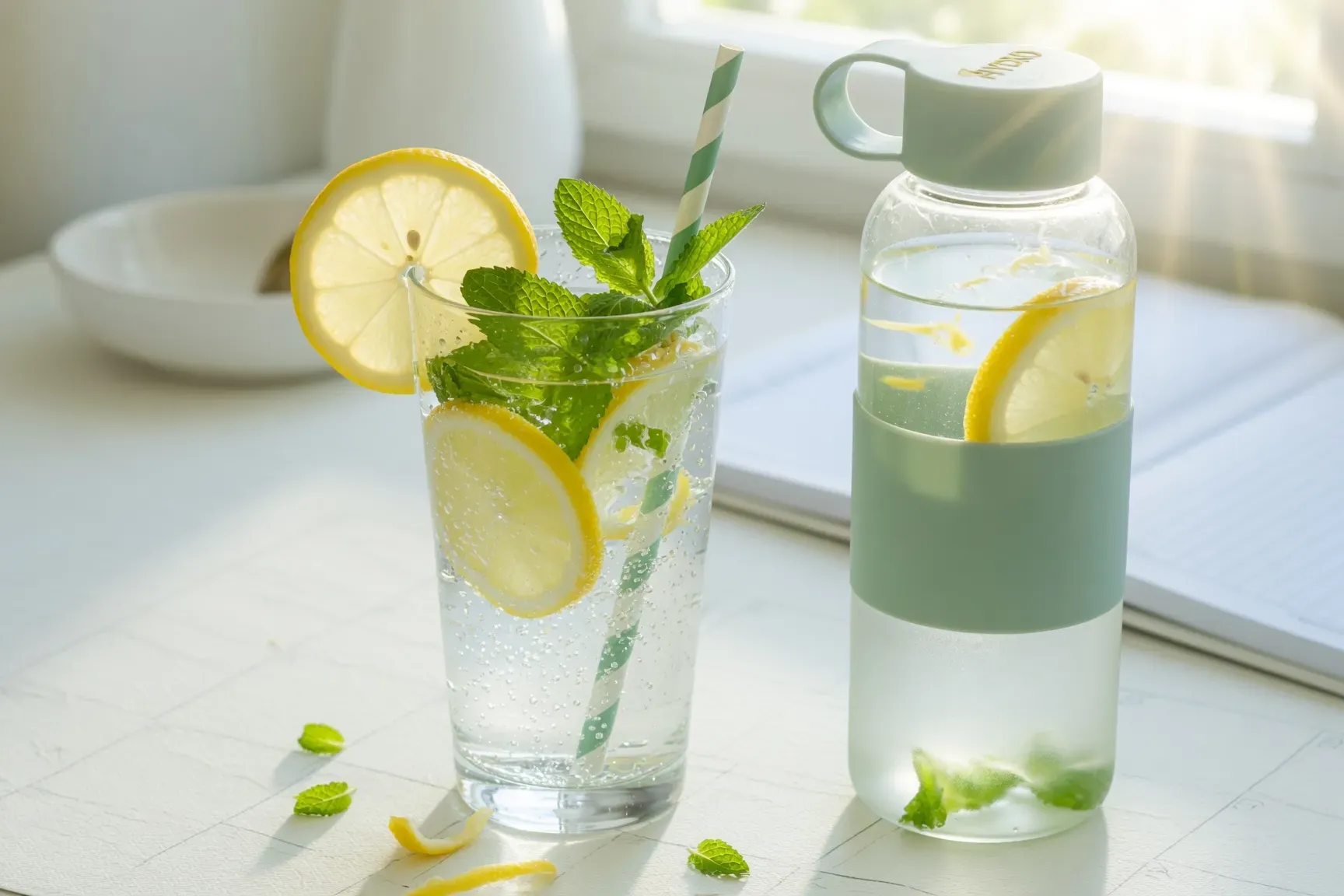
- Lemon water (nimbu pani) — water with lemon is well tolerated through pregnancy, provides vitamin C, and is a gentle way to increase daily fluid for women who find plain water unexciting
- Soups, rasam, and thin dal — these are substantial fluid contributors in a South Indian diet; a bowl of rasam at lunch and dinner adds up meaningfully
- Chaas / sharbats — traditional Indian drinks that can provide hydration with electrolyte support
- Milk (dairy and fortified plant milk) — counts toward fluid intake and also provides calcium, protein, and B12
Counts partially:
- Chai and coffee — both contain water and contribute to fluid intake, but their caffeine content has a mild diuretic effect at higher doses. At the amounts recommended in pregnancy (limited caffeine, ideally below 200mg per day), chai and coffee contribute net fluid rather than depleting it. But they should not be the primary hydration strategy.
- Fruits with high water content — watermelon, cucumber, orange, mango, pomelo, and most other fresh fruits contain significant water. Eating these contributes to daily fluid intake in a way that is easy to overlook.
- Cooked vegetables — vegetables absorb and retain water through cooking; they contribute modestly to fluid intake as part of regular meals.
Does not count meaningfully:
- Very sweet, concentrated drinks — thick fruit syrups, commercial soft drinks — provide fluid but with significant sugar and often additives; not recommended as hydration sources in pregnancy
Practical strategies for staying hydrated in pregnancy
The challenge with hydration in pregnancy is rarely lack of knowledge — most women know they should drink more water. The challenge is that in the demands of daily life, particularly in the nausea and fatigue of early pregnancy or the increasing discomfort of later pregnancy, drinking water consistently takes lower priority than it should.
Drink before you feel thirsty. Thirst is a late signal of dehydration. By the time you feel thirsty, mild dehydration has already developed. Drinking proactively — a glass of water on waking, before each meal, between meals, and before bed — is more effective than responding to thirst.
Keep water visible and accessible. A water bottle carried throughout the day, or a large jug kept on the kitchen counter, serves as a constant visual reminder. Water that requires getting up and finding is consumed far less than water sitting in front of you.
Use chaas and buttermilk. For women who find plain water monotonous or who struggle to drink enough, diluted buttermilk is an excellent pregnancy hydration strategy. It provides fluid, salt, electrolytes, and is actively cooling in the South Indian and Ayurvedic sense — particularly useful in Kerala’s warm climate. A glass of thin buttermilk with salt and a little cumin or curry leaf is both culturally familiar and nutritionally useful.
Eat water-rich fruits and vegetables. On days when drinking feels difficult — particularly in the first trimester when nausea makes plain water unappealing — eating watermelon, cucumber in raita, orange segments, or other water-rich foods contributes to fluid intake in a form that may be more tolerable.
Pay attention to signs of dehydration. Headache in pregnancy, particularly in the afternoon or evening, is often related to insufficient fluid intake in the preceding hours. Dark urine, reduced urination, dizziness, and constipation are also signals. Respond to these by increasing fluid intake rather than treating the symptom alone.
Adjust for the climate. In Kerala’s peak summer months, fluid needs are higher than in cooler seasons. If you are sweating more, outdoors more, or in a hot environment, your intake should increase accordingly.
Hydration in the first trimester: nausea and water aversion
One of the more uncomfortable first trimester experiences is water aversion — the specific nausea that plain water can provoke in some women, particularly in the morning or when consumed on an empty stomach.
If plain water makes nausea worse, alternatives that may be better tolerated include:
- Water with a slice of lemon or lime — the citrus changes both the taste and smell of the water enough to make it more tolerable
- Cold coconut water — the slight natural sweetness and temperature may bypass the nausea trigger
- Very weak ginger tea or ginger-infused water — ginger also actively helps with nausea
- Thin buttermilk with a pinch of salt — often tolerated when plain water isn’t
- Ice chips or very cold water — the temperature can be more tolerable than room-temperature water for some women
- Watermelon, cucumber, or other water-rich foods when drinking fluid is not possible
The goal in the first trimester is not perfect hydration. It is adequate hydration despite the challenges. Do what you can with what your body will accept, and know that the nausea-related fluid restriction of the first trimester is temporary.
A note on electrolytes
Electrolytes — sodium, potassium, magnesium, and chloride — are minerals that help the body use and retain water properly. During pregnancy, electrolyte needs increase alongside fluid needs.
For most women eating a normal South Indian diet — which includes salt in cooking, potassium-rich fruits and vegetables, and magnesium from dal and whole grains — electrolyte intake is adequate without specific supplementation. If vomiting has been significant, or if you’ve been sweating heavily in hot weather, natural electrolyte sources (tender coconut water, buttermilk with salt, diluted lime water with a pinch of salt) are useful additions.
Commercial sports drinks are not recommended as a primary electrolyte source in pregnancy due to their sugar and additive content. Natural alternatives serve the same purpose without the concerns.
The honest summary
Drink more than you think you need to. Make it easy by keeping water visible. Use chaas, coconut water, rasam, and water-rich fruit to reach your daily target through multiple sources. Pay attention to the signals your body sends when it’s getting insufficient fluid — headache, dark urine, constipation — and respond to them with fluid rather than other remedies.
Hydration in pregnancy is not glamorous nutrition. It doesn’t come in a supplement. It doesn’t have a remarkable nutritional profile. It is simply the medium in which everything else your body is doing during pregnancy takes place — and it deserves the same consistent attention as any other aspect of your care.
This article is for general educational purposes only and does not replace personalised nutrition or medical advice. Always consult your doctor, midwife, or a qualified healthcare professional about your specific needs during pregnancy.