
Fear of Childbirth (Tokophobia): You Are Not Alone and It Can Be Helped
A compassionate guide to tokophobia and fear of childbirth during pregnancy — what it is, how severe it can be, and the support options available in India.
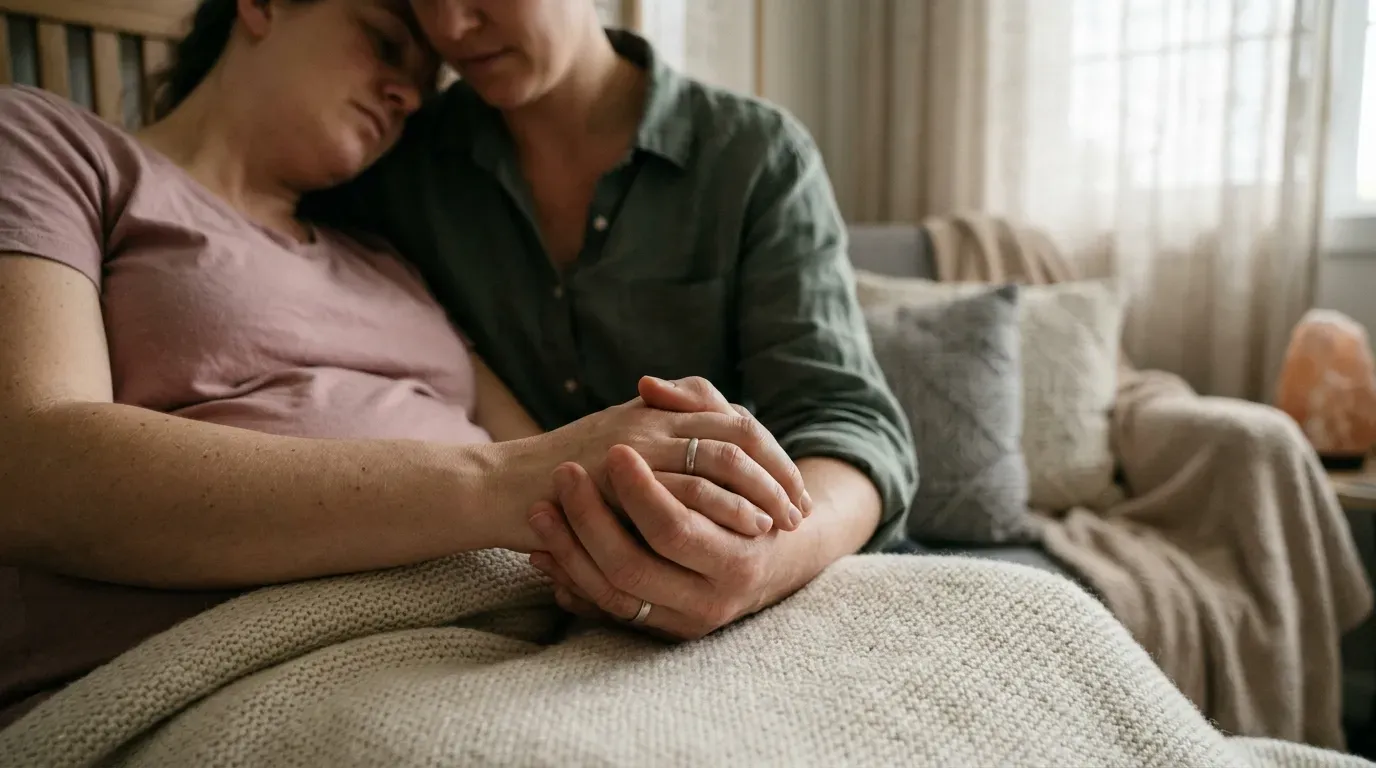
Almost everyone is somewhat apprehensive about childbirth. The anticipation of pain, the unfamiliarity of what will happen, the awareness that it is an intensely physical and unpredictable event — these produce a degree of nervousness that is entirely understandable and entirely normal.
Tokophobia is something qualitatively different from this normal apprehension. It is a severe, often debilitating fear of childbirth that can affect every week of pregnancy, shape major decisions about how and where to deliver, lead women to avoid becoming pregnant altogether, and in severe cases cause a level of distress that resembles a phobia in its clinical sense.
It is also, still, rarely named in clinical settings — and almost never in Indian ones. Women who experience it are told they are overreacting, that everyone is scared, that they will forget all of it once the baby is in their arms. They are given information and statistics when what they need is acknowledgement and support. And they are left to manage a profound fear in silence, in a culture that expects pregnancy to be a time of anticipation and celebration.
This article is for those women. To name what this is. To explain that it is real and recognised. And to describe the forms of support that actually help.
What tokophobia is
Tokophobia — from the Greek tokos (childbirth) and phobos (fear) — is an intense, pathological fear of pregnancy and childbirth. It was formally described in medical literature in 2000 by psychiatrist Kristina Hofberg, though the experience it describes has existed far longer.
Tokophobia exists on a spectrum. For some women it is a severe anxiety specifically focused on the physical process of labour and birth. For others it extends to pregnancy itself — the physical changes, the loss of bodily autonomy, the medical interventions involved. In its most severe form it prevents women from having children at all, not from lack of desire but from fear.
There are two recognised types:
Primary tokophobia — fear of childbirth in women who have never given birth. It often develops in adolescence or early adulthood, sometimes following exposure to graphic birth accounts or imagery, sometimes with no identifiable trigger. Women with primary tokophobia may have been anxious about childbirth since before they were pregnant.
Secondary tokophobia — fear of childbirth following a previous traumatic birth experience. A previous labour that involved unexpected complications, emergency interventions, significant pain that felt unmanageable, loss of control, perceived indifference from medical staff, or perinatal loss can produce a fear of future births that meets the threshold of tokophobia. Secondary tokophobia is a response to real experience and can be severe.
What it feels like from the inside
The experience of tokophobia during pregnancy is not simply “being scared about labour.” It tends to be:
Intrusive thoughts. Vivid, unwanted mental images of the birth — the pain, complications, things going wrong — that arrive without invitation and are difficult to dismiss.
Physical anxiety response. Panic, tachycardia, breathlessness, nausea, or dissociation when thinking about, reading about, or discussing birth. The body responds to the thought of birth as though the threat is present, not future.
Avoidance. Not attending antenatal classes because the discussion of birth is too difficult. Not reading the birth preparation sections of pregnancy books. Not watching birth videos. Not asking questions at antenatal appointments that might lead the conversation toward labour. This avoidance is not laziness or lack of preparation — it is a protective response to something that is genuinely distressing.
Constant preoccupation. The approaching birth as a source of dread that cannot be put down. Not just occasionally worried — chronically, persistently frightened in a way that colours the entire pregnancy.
Requests for elective caesarean section. Many women with tokophobia request caesarean birth not as a preference but as a way of avoiding what feels unbearable. This is a complex area — discussed below — but the request is meaningful clinical information, not a frivolous preference.
Isolation. Not being able to share what is actually happening internally because the response from others has been dismissive or minimising. Finding the gap between what pregnancy is supposed to feel like and what it actually feels like unbridgeable and lonely.
The Indian context: why tokophobia is particularly unaddressed here
Specific features of the Indian pregnancy experience make tokophobia harder to name and harder to get help for:
Birth stories as social currency. In many South Asian communities, older women share birth stories — often graphically and without apparent awareness of their impact. The accumulation of these stories, from the third trimester onward in particular, can intensify fear in women already anxious about birth, and is particularly distressing for women with tokophobia who cannot easily exit the conversation.
Expectations of stoic endurance. There is a cultural narrative around labour pain as something women must simply endure — that it is the price of motherhood, that complaining about it is weak, that women before us managed and so will you. For a woman with tokophobia, this narrative is not reassuring — it closes off the possibility of getting support and makes the fear feel shameful rather than treatable.
Limited access to midwifery-centred, supportive birth preparation. In many Indian settings, birth preparation is limited to medical appointments and, increasingly, brief antenatal classes. The kind of sustained, psychologically informed birth preparation — working through fears with a skilled birth educator or counsellor over multiple sessions — is less available than in some other contexts.
The caesarean conversation. In India, high caesarean rates coexist with a medical culture that does not always openly discuss maternal preferences around mode of delivery. A woman who raises a request for caesarean due to fear may be told it is not medically indicated and the conversation ends there. Or the caesarean may be agreed to without any exploration of what is driving the request or whether support might change how the woman feels. Neither of these serves her well.
What actually helps
Being believed and taken seriously
The first and most important thing that helps is having the fear acknowledged as real and significant. A provider who says “this fear is real, it has a name, and there is support for it” does something immediately meaningful — it breaks the silence and ends the isolation.
If your provider has minimised your fear of birth, you are entitled to name it more clearly: “I am experiencing severe fear of childbirth that is affecting my pregnancy significantly. I would like to discuss what support is available.”
Talking therapy
Cognitive behavioural therapy (CBT) is the most evidenced treatment for tokophobia. It works by identifying and challenging the catastrophic thought patterns that sustain the fear, gradually building a more realistic and manageable picture of birth.
For secondary tokophobia — fear following a traumatic birth — trauma-focused therapies including EMDR (Eye Movement Desensitisation and Reprocessing) have strong evidence. Traumatic birth experiences can produce post-traumatic stress responses, and these respond to trauma-specific treatment rather than general anxiety approaches.
Access to therapists experienced in birth-related fear is limited in India, but online platforms now provide some access to trained psychologists. An experienced psychologist or psychiatrist working with perinatal mental health is the appropriate referral.
Dedicated birth fear appointments
Some maternity units offer dedicated appointments with a midwife or obstetrician specifically to discuss birth fears — going through what the woman is afraid of, what her previous experience was if relevant, what the evidence says, what the options are, and building a birth plan together. These appointments are standard in some countries and are rare in India.
If your facility does not offer this, you can request an extended appointment with your obstetrician specifically to discuss your fears around birth. Coming with a list of your specific fears — written down so they are not lost in the moment — makes the conversation more productive.
Birth education
Well-facilitated birth preparation — not just information about the physical process but genuine preparation that includes pain management options, communication strategies, birth environment considerations, and what to do if things deviate from plan — significantly reduces fear in women with birth anxiety. This is different from being told “it’s natural and you’ll be fine.”
Hypnobirthing, though not universally accessible in India, is one structured approach that combines relaxation techniques with reframing of birth that many women with birth fear have found helpful. It does not require homebirth or a particular birth philosophy — its techniques are applicable in hospital births.
The caesarean conversation: holding it honestly
Women with severe tokophobia sometimes find that knowing they have the option of caesarean birth — and having a genuine conversation about mode of delivery — reduces their fear enough to make vaginal birth more accessible. The permission to have that conversation is itself therapeutic.
At the same time, it is worth exploring fear-based caesarean requests carefully, because the surgery carries its own risks and recovery demands that a woman in the midst of acute anxiety may not be fully weighing. A provider who takes the fear seriously, offers real psychological support, and holds an honest conversation about all the options — including caesarean, its implications, and what vaginal birth with strong support might look like — serves the woman better than either a quick refusal or an unexamined agreement.
This conversation is best held with a provider who has time, who is not dismissive of maternal mental health, and who is willing to revisit it across more than one appointment.
After the birth: processing the experience
Women with tokophobia who give birth, whatever the mode, often need support afterward — to process the experience, to debrief what happened, and to begin making sense of it in a way that does not compound fear for any future pregnancy. A birth debrief appointment with a supportive provider or counsellor is valuable and worth requesting.
The honest message
Fear of childbirth that is severe enough to affect your daily life during pregnancy, to cause you to avoid thinking or talking about birth, or to feel like an insurmountable obstacle to the delivery you are approaching — this is real, it has a name, and it deserves support.
You are not being dramatic. You are not weak. You are not less ready for motherhood than a woman who is not afraid. You are experiencing something with a recognised clinical name that affects many women — including many who have never heard it named and therefore believed, until now, that they were simply failing to cope with something everyone else managed easily.
They are not managing it easily. Some of them are just managing it silently.
You do not have to.
This article is for general educational purposes only and does not replace personalised mental health support. If you are experiencing severe fear of childbirth, please speak with your doctor, midwife, or a qualified mental health professional. In India, support is available through iCall (9152987821) and the Vandrevala Foundation (1860-2662-345).